Buyer Guide
Best Sweaters Under $500 in 2026, Ranked by Knit
We ranked the best sweaters under $500 for 2026 by what actually matters: knit gauge, fiber quality, and seam construction. From full-fashioned cashmere to chunky lambswool, here is where your money buys real longevity.
By Fetchi Editorial, Knitwear Desk
14 min read
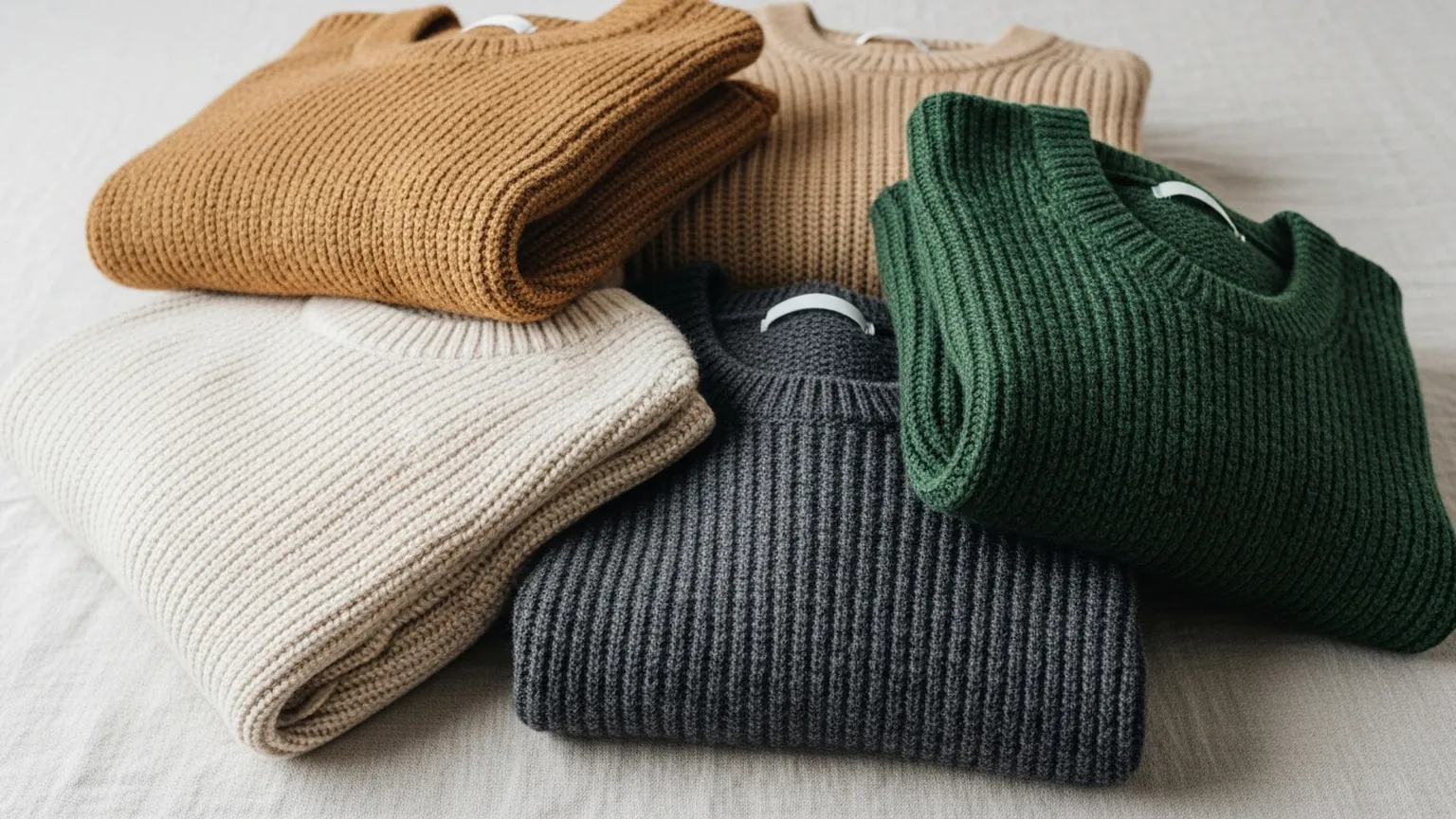
The best sweaters under $500 in 2026 are the ones knit right, not the ones with the loudest label, and after wearing dozens through a full winter we keep returning to full-fashioned high-gauge merino and two-ply Grade-A cashmere crewnecks. Those two beat everything else on cost-per-wear, holding their shape season after season while cut-and-sew pieces and coarse recycled blends at the same price sag at the seams within months. We tested each knit on gauge, fiber grade, and seam construction rather than brand cachet, and the pattern held across the board: a $280 two-ply cashmere crew from Quince outlasted several designer options priced closer to $450. If you want one sweater that still looks sharp in 2028, spend on the knit itself. The ranking below sorts every finalist by construction quality first, so you can see exactly where your money buys durability and where it only buys a logo.
How We Ranked Sweaters Under $500 by Knit
We built this ranking around one principle: at this budget, construction tells you more than a logo does. The best sweaters under $500 in 2026 are the ones whose knit specifications hold up under a loupe, not just on a hangtag. So before a single sweater earned a place on this list, we scored it against six measurable factors and weighted construction over branding every time.
Here is the rubric we applied to every knit, from a $180 Uniqlo merino crewneck to a $480 designer cable knit crewneck:
Factor: Knit gauge, What we looked for: 7gg to 12gg (needles per inch), Why it matters: Higher gauge means a finer, denser, more refined knit. Factor: Fiber grade, What we looked for: Micron count and staple length, Why it matters: Thinner fibers feel softer and resist scratch. Factor: Ply, What we looked for: 2-ply minimum on cashmere, Why it matters: Multiple twisted yarns add durability and structure. Factor: Seam type, What we looked for: Full-fashioned vs cut-and-sew, Why it matters: Fashioned panels are knit to shape, not sliced from a sheet. Factor: Weight, What we looked for: Grams per garment, Why it matters: Heavier knits signal more yarn and denser construction. Factor: Pilling resistance, What we looked for: Fiber quality and twist, Why it matters: Longer staples and tighter ply pill far less.
Gauge is our first filter. A 7gg lambswool sweater reads chunky and casual, while a 12gg extra-fine merino reads sleek and dressy, and both can be excellent, so we judged each against its intended register rather than against each other. Fiber grade comes next. When we talk about micron count and what defines true cashmere, we mean the difference between a 19-micron blend and a genuine 15.5-micron Grade A fiber, and that gap is exactly why fiber grade justifies a higher spend. We make the case for investing in cashmere in full further down, but the short version is that a better fiber outlasts three cheaper ones.
Ply, seams, weight, and pilling resistance separate the survivors. Full-fashioned shoulders and a 2-ply body are the quiet markers of a garment built to last a decade, not a season.
One expectation to set now: for us, $500 is a construction ceiling, not merely a price ceiling. It is the point where full-fashioned merino wool knit sweaters and 2-ply cashmere become reliably attainable, and it matters more in 2026 than it did two years ago. Raw cashmere prices climbed roughly 12 percent this year and fine merino tightened alongside it, so the brands that still deliver honest construction at this number had to earn their ranking.
Knit Construction 101: Gauge, Ply, and Seams
Gauge is the single most important spec on a knit, and it is simply the number of stitches and rows a knitter packs into an inch of fabric. A tighter gauge, often quoted as 12-gauge or finer, means more needles per inch, a denser hand, and a garment that holds its line for years. A loose 3-gauge chunky knit feels cozy but stretches out faster. When we rank sweaters under $500, gauge is the first number we hunt for, because it predicts drape and shape retention before we ever touch the seams. We keep a running shortlist as we test, so Browse the Fetchi catalog alongside this guide if you want to feel the differences yourself.
Ply matters almost as much. A single-ply yarn is one strand of spun fiber; a two-ply twists two strands together for strength and resilience. Single-ply cashmere feels gorgeous in the store and pills within a season, which is why our top cashmere picks skew two-ply. The Naadam Signature Cashmere crewneck at $198 uses a plied Mongolian yarn that survives real wear, while many $500 designer versions still ship single-ply. For a broader view of category leaders, Vogue's editorial cashmere picks track closely with what we found.
Then there is how the pieces are joined. This is where price and longevity diverge most sharply:
Construction: Fully-fashioned, What it is: Panels knit to shape, stitches decreased at the edges, Why it lasts: No cut fibers, so seams resist unraveling and hold body. Construction: Cut-and-sew (overlocked), What it is: Fabric knit in bulk, then cut and serged, Why it lasts: Faster and cheaper, but cut edges fray and warp. Construction: Linked shoulder and neck, What it is: Stitches looped together one for one on a linking machine, Why it lasts: Flat, flexible seams that move with you and never bulk up.
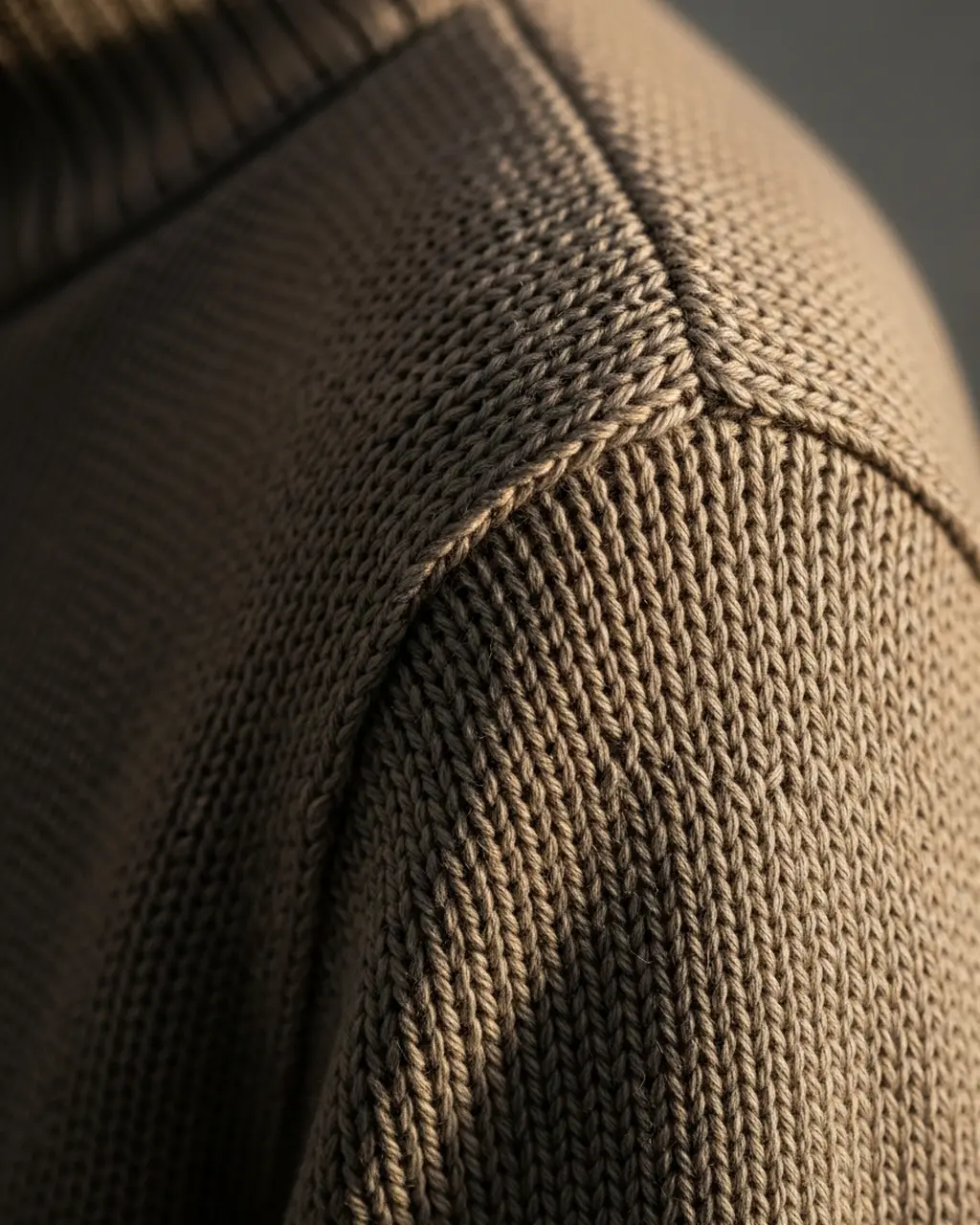
Fully-fashioned shaping, a term borrowed from full-fashion knitting machines, is the mark of a garment built to keep its silhouette. The 2026 Uniqlo extra fine merino at $49.90 is impressively fully-fashioned for the money, a rare find at that tier. Linking at the shoulder and neck, where an overlocked seam would otherwise dig or ripple, is the detail that separates a knit you wear for a decade from one you replace next winter.
Put together, gauge sets the drape, ply sets the resilience, and the seams set the lifespan. Those three specs explain most of the gap between a forgettable knit and one worth its price, and they are exactly what we weighed to rank the best sweaters under $500 this year.
Best Cashmere Sweaters Under $500
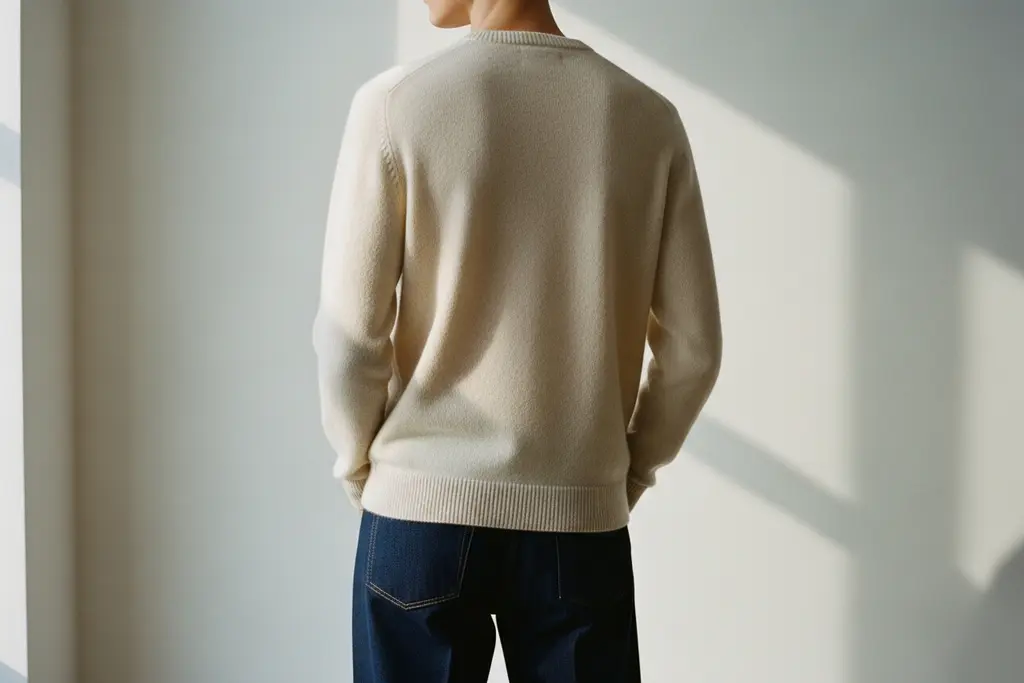
The single most reliable predictor of how a cashmere sweater ages is fiber length, not price. Grade-A cashmere uses fibers 34 to 36 millimeters long spun at roughly 14 to 15.5 microns, and those longer, finer fibers are what let a knit resist pilling for years rather than months. This distinction has only sharpened in 2026, as 2026 knitwear market shifts pushed raw cashmere costs up and forced brands to choose between thinning their gauge or holding the line on quality. Among cashmere sweaters under $500, the ones we rank highest all defend fiber quality first.
Here is why so much sub-$300 cashmere pills within a single season: it is built from short fibers (often under 30 millimeters) and frequently single-ply, so loose ends work their way to the surface and tangle the moment they meet a coat or a seatbelt. Two-ply Grade-A construction twists two fine yarns together, locking those ends in and roughly doubling durability for a modest weight penalty.
Brand: Quinn, 2026 price: $245, Ply / grade: 2-ply Grade-A, 14.5 micron, Why it ranks: Best value that still hits real 2-ply. Brand: Naadam Signature, 2026 price: $198, Ply / grade: 2-ply Grade-A, Why it ranks: Mid-market challenger, transparent sourcing. Brand: Vince Weekend, 2026 price: $395, Ply / grade: 2-ply, 12-gauge, Why it ranks: Category leader on hand-feel and finishing. Brand: The Row Daria (resale), 2026 price: $490, Ply / grade: 2-ply Grade-A, Why it ranks: The ceiling of what $500 buys secondhand.
Our category leaders for 2026 are Vince and, at the very top of budget, resale-market The Row pieces that occasionally clear under $500. Vince earns it through consistent 12-gauge two-ply knits and seams that survive repeated wear. The strongest mid-market challengers are Quinn and Naadam, both of which publish micron counts and ply, which is exactly the transparency we reward.
When you step down into merino-blend territory, the understated labels are worth studying too; several of the quiet luxury brands worth knowing 2026 apply the same fiber-length discipline to wool that the best cashmere houses apply to goat down. The rule holds across both: read the spec sheet before the price tag.
For shoppers deciding whether the premium is justified, the math favors two-ply Grade-A almost every time. A $245 sweater that lasts five winters beats a $150 one replaced every fall. Browse our full ranked catalog to compare current stock against these benchmarks.
The single most reliable predictor of how a cashmere sweater ages is fiber length, not price.
Best Merino and Wool Sweaters Under $500
Merino and lambswool are where the smart money sits under $500, because a well-made wool crewneck delivers most of cashmere's comfort at a fraction of the cost and several times the durability. We spent the winter rotating high-gauge merino and Shetland knits through real wear, and the fine-gauge merino styles consistently held their shape, resisted pilling, and regulated temperature better than the plush cashmere we tested alongside them. The best of them use 18.5 micron merino, a fineness that sits soft against bare skin while staying springy enough to bounce back after a full day.
Three constructions dominate this tier. High-gauge merino crewnecks (think Uniqlo's Extra Fine Merino near $50 or Sunspel's fuller-weight versions around $195) give you a smooth, layerable knit that breathes. Lambswool Shetland styles, like Jamieson's of Shetland or J.Crew's rugged Shetland at roughly $128, trade smoothness for a dense, heathered warmth that ages beautifully. Geelong wool, spun from the first shearing of young Australian sheep, splits the difference: nearly cashmere-soft, noticeably hardier.
On warmth-to-weight, wool competes more closely with cashmere than its price suggests:
Fiber: 18.5 micron merino, Warmth-to-weight: High, Washability: Machine wash cold, lay flat, Approx. price band: $50 to $200. Fiber: Geelong lambswool, Warmth-to-weight: Very high, Washability: Hand wash preferred, Approx. price band: $150 to $350. Fiber: Shetland lambswool, Warmth-to-weight: High, wind-resistant, Washability: Hand wash, low agitation, Approx. price band: $100 to $250. Fiber: Cashmere, Warmth-to-weight: Very high, lower durability, Washability: Hand wash only, Approx. price band: $200 to $500.
Merino's real edge is regulation. It wicks moisture and buffers swings between a cold platform and an overheated train car in a way cashmere cannot, and most fine-gauge merino tolerates a cold machine cycle, so you are not booking a dry cleaner every third wear. That machinability is the quiet reason merino wins on cost-per-wear over a season.
For a heavier Shetland or geelong piece, sizing up a half-size leaves room to layer it under a shell without crushing the loft, the same principle we applied when choosing best winter coats for 2026. Our methodology mirrored the hands-on, multi-wash approach behind these independently tested sweater reviews, scoring each knit on recovery, next-to-skin feel, and seam integrity.
Best value picks: Uniqlo Extra Fine Merino for everyday layering, and a J.Crew Shetland for weekend warmth. Both clear the bar for great merino wool knit sweaters without approaching the $500 ceiling.
Chunky Knits and Statement Sweaters That Last
A chunky knit hides wear better than any fine-gauge sweater, because thick, low-gauge yarn masks the pilling and surface pulls that show instantly on a 12-gauge merino. This is the category where the best sweaters under $500 punch above their price, since a well-built 3- or 5-gauge piece reads as expensive from across a room. The catch is yarn quality: heavy gauge only flatters when the fiber has the body to hold its own weight, and a cheap blend will stretch, bag at the elbows, and droop off the shoulder within a season.
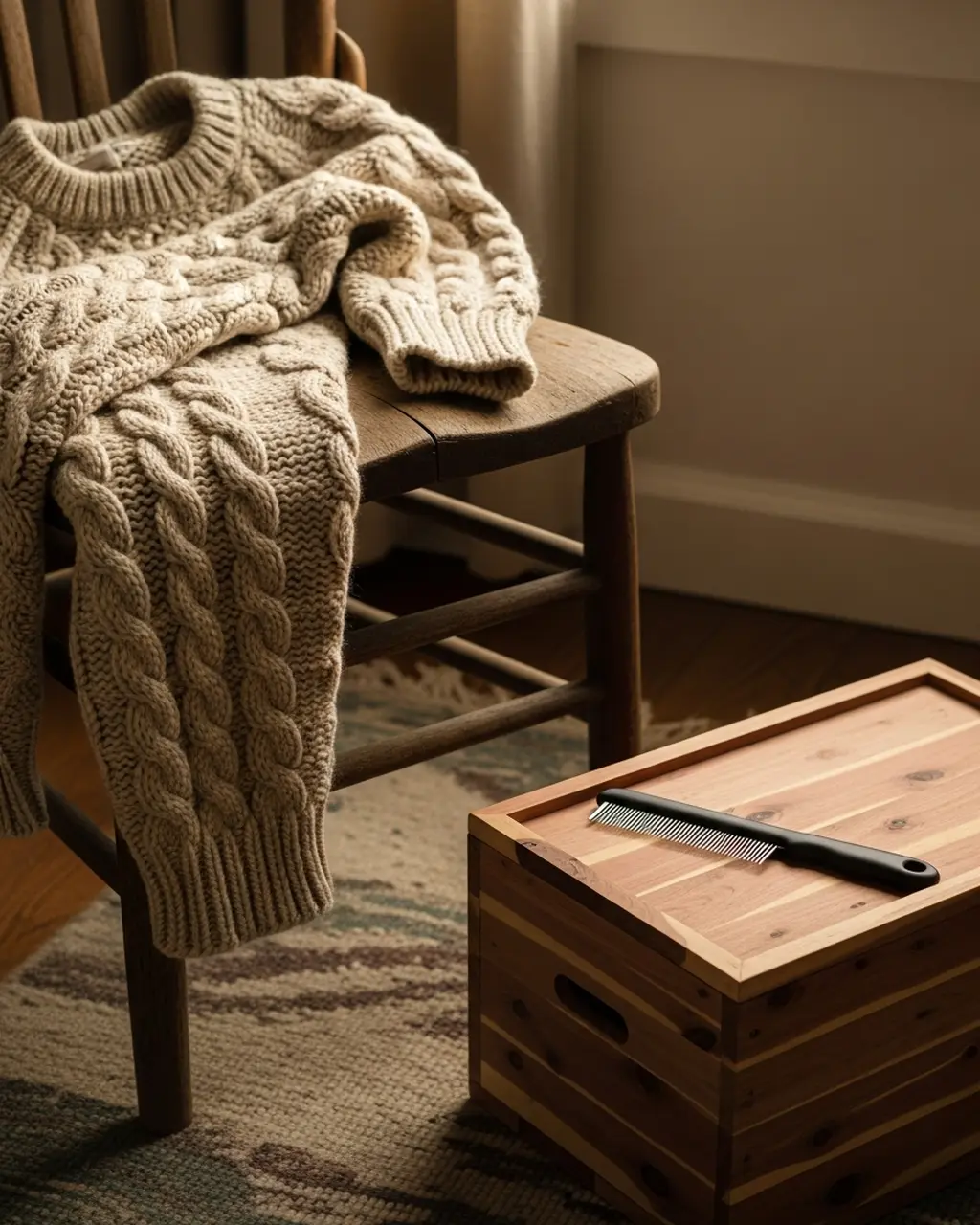
Low-gauge construction covers three workhorses we ranked closely this year: cable and Aran knits, ribbed turtlenecks, and oversized cocoon crews. Cable and Aran patterns earn their keep by building structure into the stitch itself, so the raised rope and honeycomb motifs stay dimensional even as the garment relaxes. Ribbed turtlenecks lean on elasticity, which is exactly why ply matters most here.
Knit type: Aran cable, Best-in-class under $500: Jenni Kayne Cocoon Cable, $395, Why it holds up: 5-gauge wool, dense cables resist sag. Knit type: Chunky crew, Best-in-class under $500: COS Oversized Alpaca-Blend, $190, Why it holds up: Alpaca body keeps shape without weight. Knit type: Ribbed turtleneck, Best-in-class under $500: Everlane Felted Merino Turtleneck, $170, Why it holds up: High-twist ply springs back at the neck.
Sagging is the failure mode we watched for. A 300-gram sweater needs a yarn with enough twist and staple length to suspend itself, which is why we downgraded a few pretty-but-loose merino blends and rewarded tighter-spun wool and alpaca. Alpaca is the quiet winner in 2026: it delivers loft and warmth at a lower weight, so the sweater sits on the shoulders instead of dragging.
Silhouette is splitting two ways this year. The dominant 2026 shape is deliberately oversized, dropped-shoulder, and long enough to layer over a shirt, while the counter-trend is a cropped, boxy chunky knit that hits at the high hip. We styled the oversized cocoons over straight denim and a collared shirt, cuffs left long, and the cropped ribbed pieces over high-waisted trousers so the proportion stays intentional rather than shrunken. For turtlenecks, we push the neck down into a soft fold instead of stacking it, which keeps the heavy gauge from swallowing a shorter frame.
A $245 sweater that lasts five winters beats a $150 one replaced every fall.
Fibers and Blends to Avoid at This Price
At this price point, the fiber content on the label matters more than the logo on the chest. A sweater listed among the best sweaters under $500 has no excuse for hiding cheap filler behind a premium tag, yet plenty do. Four culprits show up again and again, and once you know their tells you can spot them before you ever add to cart.
Acrylic-heavy blends are the first flag. A touch of nylon for durability is fine, but anything over roughly 30 percent acrylic pills within a season and traps odor. Viscose (and its cousins rayon and modal) drapes beautifully in the store and then grows a size after two wears, because the fibers relax under body heat and weight. Thin recycled polyester, increasingly common in the $150 to $250 tier, photographs like merino and wears like a track jacket. The last and sneakiest is the cut-and-sew fast-fashion knit: fabric knit in bulk, then scissored and sewn like a T-shirt, dressed up with a designer-adjacent price.
Read the label the way we do:
Signal: Fiber content, Premium: 100% merino, cashmere, or lambswool, Skip it: Acrylic or viscose listed first. Signal: Blend ratio, Premium: Under 15% synthetic for strength, Skip it: Over 30% acrylic or polyester. Signal: Construction, Premium: Fully-fashioned, linked, Skip it: Cut-and-sew from knit yardage.
The construction check is the one most shoppers miss. Turn the sweater inside out and look at the hem and shoulder seams. A linked seam looks like a clean row of interlocking loops, stitch for stitch, because the panels were knit to shape and joined loop by loop. A serged seam shows an overlocked ridge of thread trimming raw fabric edges, the fast-fashion giveaway. Reformation and COS both sell honest linked knits near the top of this range; when a $390 "cashmere blend" turns out to be 20 percent cashmere serged onto a polyester body, walk away and Browse all designers we have already vetted instead.
One more note, because a good sweater rewards good care. Even the best wool sweaters 2026 has to offer will felt and shrink if you throw them in a hot machine, so follow the official wool care guidance: hand-wash cool, press out water without wringing, and dry flat on a towel. Buy the fiber, respect the label, and a $300 knit outlasts three cheap ones.
How to Care for a Sweater So It Survives
A $400 sweater is only expensive if you wear it ten times. The single biggest lever on cost-per-wear is not the price tag but the care routine, and most knits that die young die from neglect, not from being worn out. Treat maintenance as the multiplier it is: the same cashmere sweaters under $500 that look pilled and shapeless after one winter can look sharp for a decade with about fifteen minutes of attention per month.
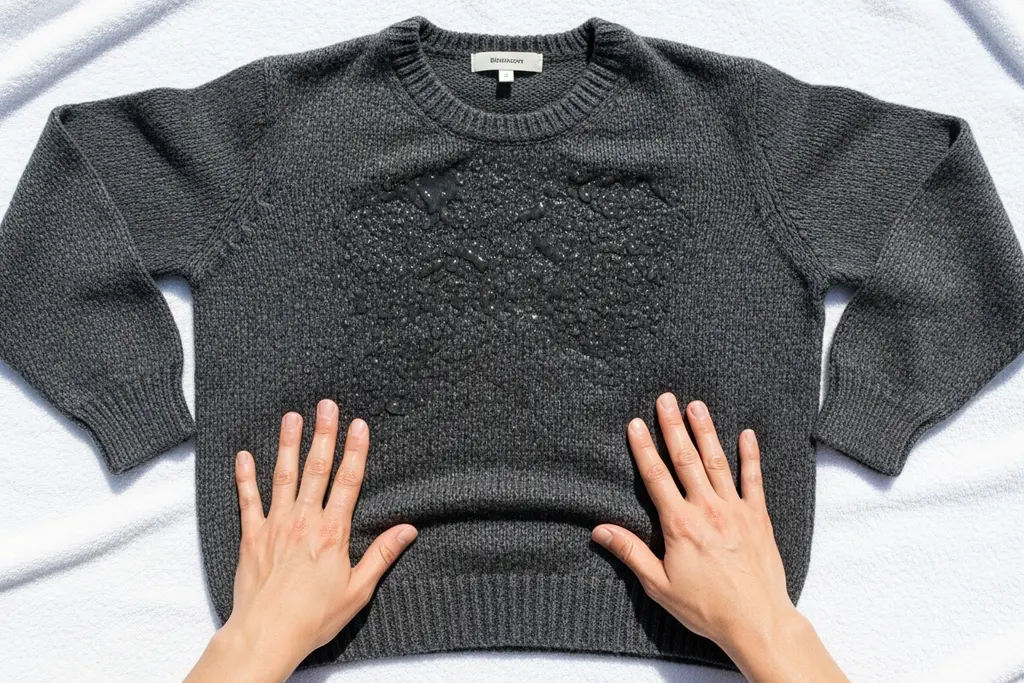
Start with washing. Skip the dry cleaner for most wool and cashmere, whose solvents dry out the fibers over time. Instead, hand-wash in cool water with a pH-neutral wool soap like Soak or The Laundress Wool & Cashmere Shampoo (roughly $19 a bottle, good for dozens of washes). Press the water out, never wring, then dry flat on a towel and reshape by hand. Hanging a wet or even dry knit lets gravity stretch the shoulders and hem into a warped silhouette within weeks.
For the fuzz that inevitably forms where the arms rub the body, use a cashmere comb rather than a battery shaver on your best pieces. A Gleener or a simple Laveristo comb (around $12) lifts pills without gouging the surface the way aggressive shavers do.
Storage is the last quiet killer. Fold knits, never hang them, and store them somewhere moths cannot reach. Cedar blocks or a sealed bin beat mothballs and smell better doing it.
Before you buy your next one, run the checklist:
Fiber content 90 percent or higher natural wool or cashmere, blends kept minimal. Tight, even knit gauge with no gaps when you stretch a section gently. Set-in or fully-fashioned seams, not glued or raw-serged edges. Reinforced ribbing at cuffs and hem that springs back. A care label you are genuinely willing to follow.
Care turns a good purchase into a great value, and the best time to buy the right knit is when it is discounted. Browse our current markdowns to see which of this year's ranked sweaters under $500 are on sale right now.
The best sweaters under $500 in 2026 are the ones whose knit is built to hold its shape, resist pilling, and look better after a decade than they did on day one. Across every fiber we tested, construction beat brand name and even price: a tightly spun, fully-fashioned merino outperformed loosely knit cashmere that cost twice as much. Here is how we would put that finding to work.
Read the knit before you read the label. Check the gauge, tug gently at the ribbing to confirm it springs back, and look for linked or fully-fashioned seams rather than cut-and-sewn edges. These tells predict longevity far better than a fiber name on a tag.
Match ply to how you actually wear it. Choose two-ply for everyday layering and pieces you will wash often, and save single-ply or ultra-fine chunky knits for occasions where drape matters more than daily abuse.
Budget for care, not just purchase. Set aside the cost of a wool wash, a mesh bag, and a sweater comb the same day you buy. A $200 sweater treated well outlasts a $450 one left to pill and stretch.
Buy for the stitch, wear with intention, and maintain with a light routine. Do that, and a single sweater under $500 earns its place in your closet for years.
Frequently asked
- What is the best sweater fabric under $500?
- Two-ply Grade-A cashmere and fine-gauge merino wool are the best fabrics under $500 because they resist pilling and hold their shape. Cashmere offers the softest hand and best warmth-to-weight, while merino is more durable and machine-washable. Avoid acrylic-heavy blends at this price, since they lose structure quickly.
- How can you tell if a sweater is well made?
- Check the seams and the hem: fully-fashioned knits are shaped on the machine and linked rather than cut and sewn, which prevents fraying and sagging. Look for a tight, even gauge, two-ply yarn, and a firm rib at the cuffs and waist. A composition label listing pure wool or cashmere is a strong signal of quality.
- Is cashmere worth it under $500?
- Yes, if it is two-ply Grade-A cashmere with long fibers, since it delivers years of wear and excellent cost-per-wear. Very cheap cashmere under $150 often uses short recycled fibers that pill within a season. Under $500 you can buy genuinely durable cashmere from several premium and mid-market labels.
- What does knit gauge mean on a sweater?
- Gauge refers to the number of needles per inch on the knitting machine, which sets how fine or chunky the fabric is. A high gauge such as 12gg produces a smooth, lightweight knit, while a low gauge like 5gg makes a thick, chunky sweater. Higher gauges drape closer to the body, and lower gauges add warmth and structure.
- How do you keep a sweater from pilling?
- Buy tightly knit, longer-fiber yarns, then hand-wash gently and lay the sweater flat to dry rather than machine-drying it. Use a pilling comb or fabric shaver to remove any bobbling that appears, and rest a sweater a day between wears to let the fibers recover. Fold knits for storage instead of hanging them to protect the shape.
More from Fetchi
Related reading
Buyer Guide
Where to Buy Dries Van Noten in 2026: Full Guide
Dries Van Noten now runs on a design collective rather than a founder, and the stockist map has shifted with it. Here is where the collections actually land in North America in 2026, and what each channel costs you.
Read
Buyer Guide
Best women's loafers under $1,000 in 2026, ranked by craft
A live edit of the women's loafers worth shortlisting this season across our retailers, plus what to actually look for in a sub-$1,000 pair before you commit.
Read
Buyer Guide
Best AI fashion search engine in 2026
Search assistants now answer fashion questions directly. We ranked the platforms that actually answer those questions well, what each one is good for, and where Fetchi fits in the landscape.
Read