A live edit of the winter coats worth shortlisting across our retailers, plus the construction tells that separate a piece worth a decade from one worth a season.
By Fetchi Editorial, Outerwear desk
7 min read
The winter coat is the single purchase that decides whether the rest of a wardrobe lives or dies between October and March. Get it right and the wool topcoat, the puffer, or the long technical parka carries from a school run to a downtown dinner without negotiation; get it wrong and you spend four months apologizing for the coat that does not quite do either job. The sub-$1,500 tier is the band where construction quality and recognizable design still overlap meaningfully for most shoppers, and the construction tells are not that mysterious once you know where to look. This is the working guide for 2026, and the shapes worth shortlisting across the dominant categories.
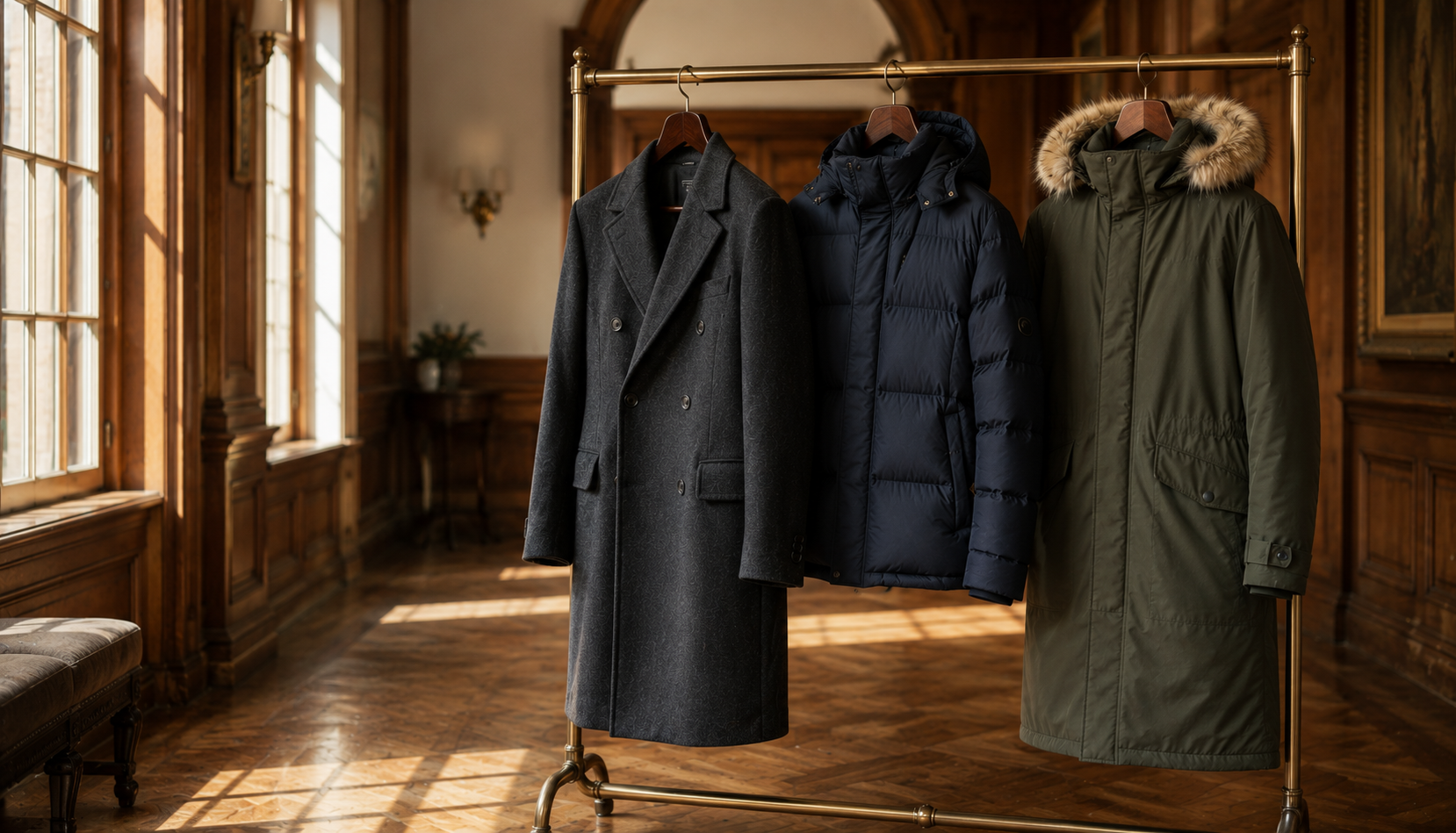
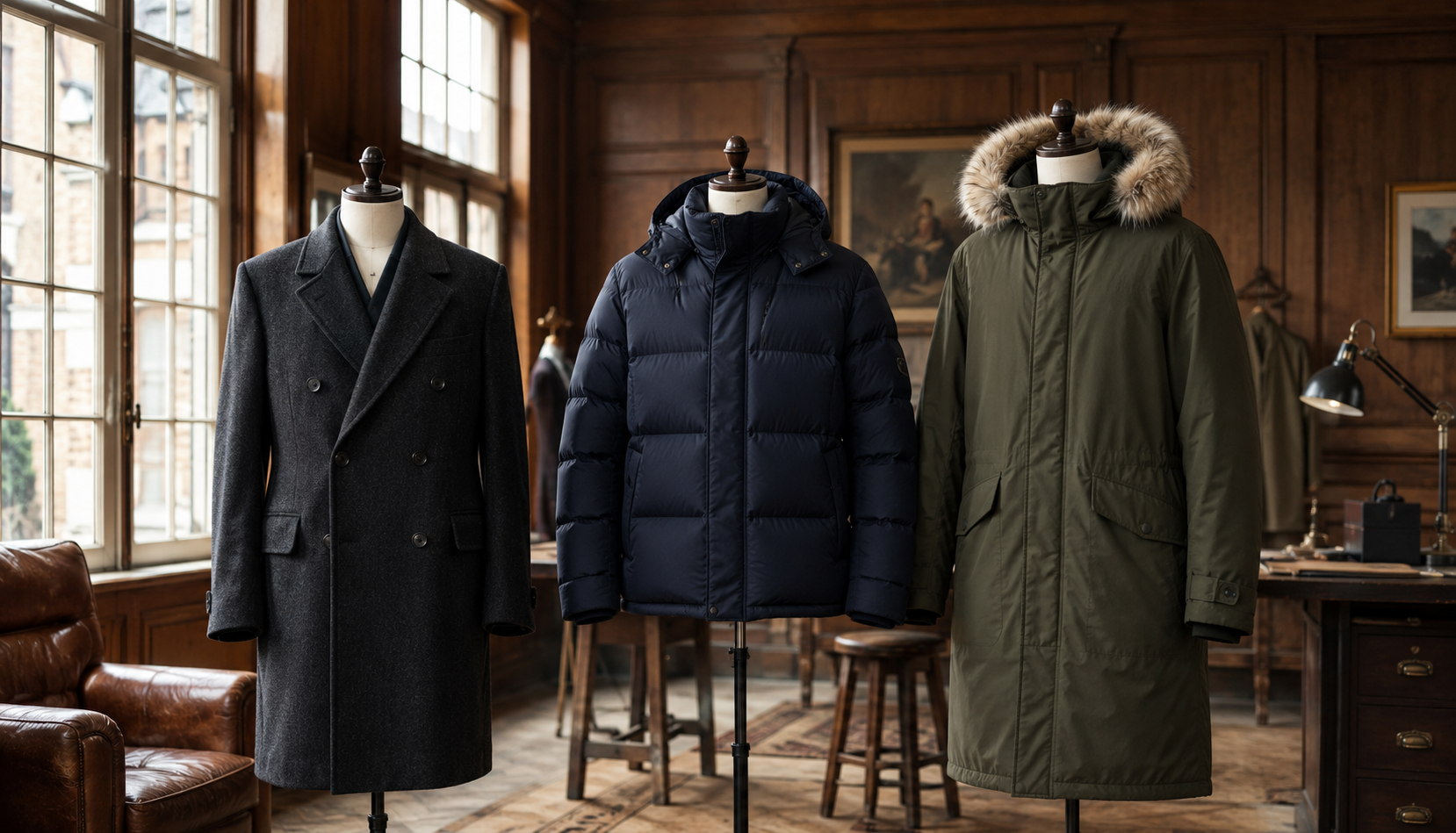
Three coats cover most of the December-to-March wardrobe: a wool topcoat for office and weekend, a down puffer for cold-snap mornings, a long parka for actual winter.
The list below pulls live from across the retailers we track. Sort is cheapest in-stock first, and it re-prices as listings move. A coat that was $1,800 yesterday and dropped to $1,150 overnight will move up the grid automatically; one that sells out drops off. Treat this as a working shortlist rather than a static recommendation. For the broader market beyond what surfaces here, the menswear coats catalogue and the women's coats and jackets index carry the rest of the field, and the cross-retailer view at is the cleanest way to compare prices on the same piece across retailers.
Live cross-retailer pricing on winter coats across our partners, sorted by lowest in-stock price first. Click any piece to see the full price history we have on file before you commit, the price-tracking is the part that saves you from buying the same coat at two different markdowns.
Live winter coats sub-$1,500, sorted cheapest first:
A double-breasted wool topcoat in charcoal or navy is the steadiest sub-$1,500 pick. It carries from a Monday meeting to a Saturday walk without changing register.
The wool topcoat does the most work of any winter coat at this price tier. A well-made piece in charcoal, navy, or camel pairs with tailored trousers and a knit on a Monday and with denim and a heavy sweater on a Saturday without changing register. The construction tells worth knowing: a wool content of at least 80% (anything below 70% is wool-blend in disguise and will pill at the cuffs by year three), a fully-bagged lining (viscose or cupro, not partial polyester), and a real shoulder seam that follows the natural line of the wearer's shoulder rather than dropping aggressively. The heritage Italian and British mills behind the better topcoats at this price (the same factories that supply the houses in our quiet luxury roundup) all hit those marks; the brand markup above $1,500 is mostly cashmere blends and house finishing rather than fundamentally different construction.
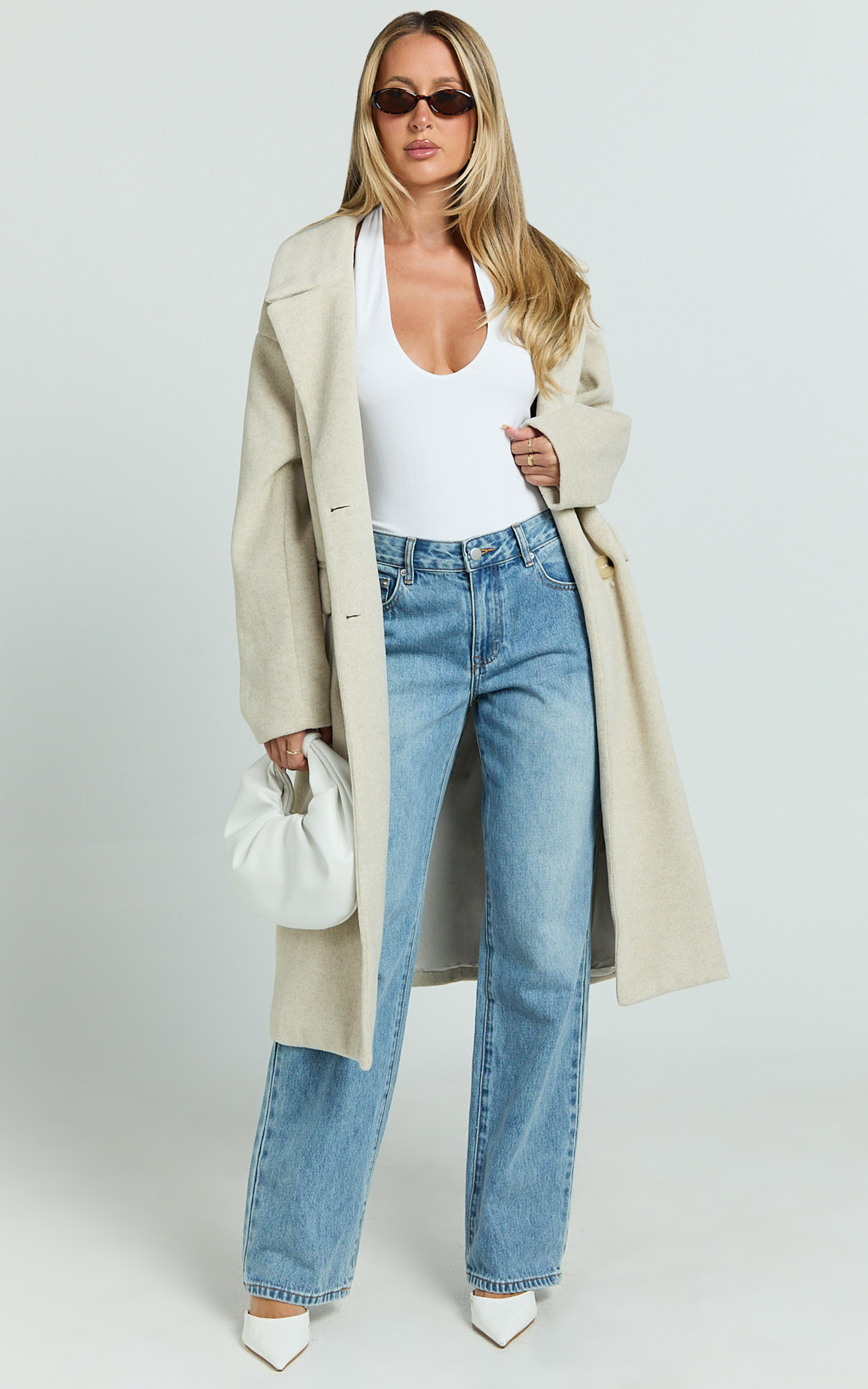
Shape matters more than length. A double-breasted topcoat reads dressier and has more structure across the front; a single-breasted topcoat reads softer and more flexible across casual contexts. Both work at sub-$1,500 if you commit to the silhouette that suits your existing wardrobe. The unstructured topcoat (no shoulder pad, soft chest, drape-cut front) is the contemporary read on the category and pairs well with the proportions in our oversized blazer piece. The longer cut (mid-calf or longer) reads more grown-up and survives a real winter better than the shorter car-coat length, which sits between the topcoat and the jacket categories without doing either well.
“A double-breasted wool topcoat in charcoal carries through a decade of winters. The construction tells are stitch density, full lining, and a shoulder seam that follows the wearer, not a hanger.”
The down puffer is the second coat in the rotation and the one that handles the actual cold (sub-minus-10 mornings, multi-block walking commutes in January, weekend travel into actual snow). The construction tells here are different from the wool topcoat: fill power above 700 (anything below 600 is mid-tier and packs down poorly), an outer shell that handles light moisture (most contemporary puffers ship with a DWR coating that holds up for a couple of seasons before needing re-treatment), and box-baffle construction rather than sewn-through (the sewn-through seams compress the down at the stitch lines and create cold spots). The Italian and Japanese contemporary brands that have moved into the down-puffer market in the last five years (the same brands covered in our Toteme piece and the Lemaire guide) tend to hit those marks better than the legacy outerwear specialists, who lean on brand recognition rather than construction at the sub-$1,500 tier.
Length matters here too. A mid-thigh puffer is the most versatile silhouette and the easiest to layer over a knit and under a wool topcoat in transitional weather. A long puffer (mid-calf or longer) handles deeper cold but reads bulkier across the rest of the outfit and is harder to pair with formal pieces. The cropped puffer is a styling-driven piece that handles transitional fall and spring weather but does not do real winter work. For practical cold-weather context, the proportions discussion in our case for Japanese denim covers the silhouette logic that pairs cleanly with mid-thigh puffer outerwear.
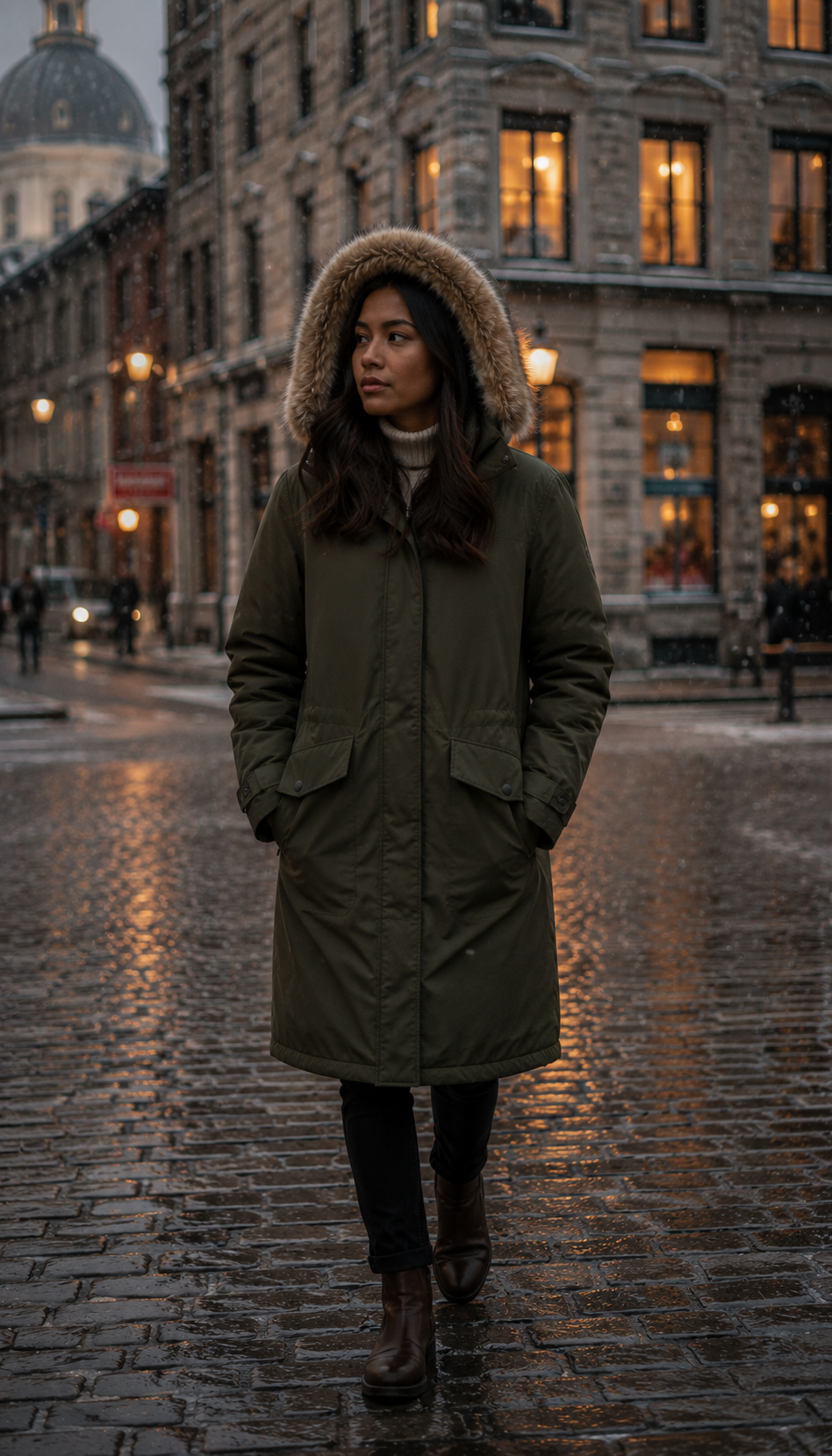
The long technical parka is the third coat in a Canadian or northern-US winter rotation and the one that handles serious weather (below minus-15, sustained snow, multi-hour outdoor exposure). The construction tells are technical rather than tailoring-driven: a fill power of at least 800 for the down chamber, a Gore-Tex or equivalent waterproof shell (not a polyurethane coating, which fails at the seams within two years), taped seams across the high-stress zones (shoulder, hood, side seams), and a removable fur or faux-fur hood ruff that breaks the wind around the face. The heritage Canadian and Italian outerwear specialists at the sub-$1,500 tier hit those marks reliably; the fast-fashion parkas at half the price do not, and the failure modes (seam leaks, down clumping, zipper failure) tend to show up in the second winter.
Color and finish matter less here than in the wool topcoat and puffer categories. The long technical parka is a function-first piece and most shoppers pick olive, navy, or black for camouflage against urban backgrounds and snow. The pop colors (rust, mustard, deep red) read more playful but date faster across multiple winters. For Canadian shoppers specifically, the heritage Canadian outerwear brands carry the deepest assortment at this tier; the broader contemporary market runs through our products index.
A long technical parka with an 800-fill chamber and a taped Gore-Tex shell handles below-minus-15 without negotiation. The fur ruff breaks the wind around the face.
Markdowns on winter coats follow a tighter calendar than the rest of the wardrobe because the buying window is so seasonal. Late October to mid-November is the early-season markdown window at the brand-direct sites (especially the Canadian outerwear specialists, who price-anchor in early fall and then trim selectively as snow lands). Mid-January is the deepest markdown window across all three coat categories, when prior-season inventory clears at 30-50% off to make room for spring deliveries; the markdown depth varies by retailer and category, with third-party retailers typically going deeper than brand-direct. Mid-July and August are the off-season clearance windows where the prior-prior season pieces (two-year-old stock) sometimes drop to 60-70% off at the discount third parties.
The math on a good winter coat works out across years rather than seasons. A $1,200 wool topcoat worn 80 days a year for eight years lands at $1.85 per wear and ages predictably across the decade; the same coat at $400 from a fast-fashion label, worn for two seasons before the lining fails, lands at $2.50 per wear with no resale path. The price-per-wear logic is the same one that runs through our case for unbranded basics, the cashmere piece, and our case for Japanese denim; the conclusion holds across categories. For broader cross-retailer comparison shopping, the products catalogue and the menswear coats catalogue carry the rest of the field.
Three rules. First, decide which of the three categories (wool topcoat, down puffer, long parka) your winter actually needs before you start browsing, the worst purchase is the third coat in a category you already own. Second, hold any candidate up to the light: a wool topcoat that lets light through clearly is low-content wool blend; a down puffer that shows the stitch lines through the fabric is low-fill. Third, size up half a size for the wool topcoat and the long parka (you want room for a knit underneath), and stay true-to-size for the down puffer (which is meant to layer under a topcoat rather than over heavy layers). The proportions logic in our oversized blazer piece carries through here: the coat sits at the outer layer of the silhouette and dictates the rest of the proportions below it.
For brand-direct browsing, the heritage Italian and British topcoat makers anchor the wool category; the Italian, Japanese, and Canadian outerwear specialists anchor the down puffer and parka tiers. Third-party retailers (SSENSE, MR PORTER, Net-a-Porter, Mytheresa) carry the broader contemporary assortment across all three categories and tend to discount earlier than brand-direct. Holt Renfrew and Nordstrom on the department-store side rotate the assortment seasonally and discount later but cleaner. For Canadian shoppers specifically, SSENSE Montreal carries the deepest topcoat and parka assortment in Canada year-round.
Frequently asked
What is the best winter coat under $1,500 for 2026?
The right answer depends on which of the three categories your winter actually needs. A wool topcoat in charcoal or navy is the steadiest first coat; a mid-thigh down puffer handles cold-snap commutes; a long technical parka is the third coat for real winter. Browse the live cross-retailer assortment at the products catalogue.
Wool, down puffer, or technical parka first?
A wool topcoat in charcoal or navy is the most flexible first purchase, it carries from work to weekend and handles transitional fall and spring as well as mild winter. The down puffer is the second coat; the long technical parka is the third coat for serious winter. The menswear coats catalogue and women's coats index cover the broader market.
When do winter coats actually go on sale?
Late October to mid-November is the early-season window; mid-January is the deepest markdown window; mid-July and August are the off-season clearance windows for prior-prior season stock. Same calendar as the rest of the luxury market discussed in our leather jacket guide but more compressed because of the seasonal buying pattern.
How can I tell a good winter coat from a cheap one without trying it on?
Wool content above 80% (check the label), fill power above 700 for puffers (also on the label), and box-baffle rather than sewn-through construction for any down piece. A wool topcoat that lets light through clearly is low-content; a puffer that shows stitch lines through the shell is low-fill. The construction logic in our case for unbranded basics covers the broader frame.