The single most photographed coat of the last decade is also the easiest to wear badly. A field guide to the cuts, layers, and trousers that earn the price.
By Fetchi Editorial
5 min read
The camel coat is one of those pieces that has cycled through every style decade since the 1920s and somehow exits each one looking less dated than when it went in. The shade itself (originally drawn from natural camel-hair fabric) reads as expensive even when the fiber is wool, and the silhouette has migrated from polo coat to overcoat to oversized wrap without losing its core appeal. The point of buying a camel coat in 2026 is that it survives weather, registers as adult, and pairs with almost every neutral already in your closet. The trick, as with most pieces this versatile, is knowing what to put under it.

A camel coat reads as a single object. Cream, charcoal, navy, or chocolate underneath frames it; black competes with it.
Three details separate a camel coat that lasts a decade from one that pills by spring. Fiber blend first. A 100% wool melton or a wool-cashmere double-faced cloth holds shape and resists wrinkles; anything cut from a polyester-heavy blend turns shiny under shoulder bags by year two. The classic Italian and British mills (Loro Piana, Joshua Ellis, Abraham Moon) supply most of the fabric worth paying for, and the better houses list the mill on the inside placket. Weight matters too. A 600 to 800 gram cloth carries a real Canadian winter; under 500 grams reads as a duster more than a coat.
Construction is the second variable. A camel coat should have a half-canvas or full-canvas front; a fully fused coat at this color will telegraph every wrinkle and crease the lapel within a season. The same logic from our case for investing in cashmere applies here: the cheap version is not just less durable, it visibly looks cheap on the body within months. Length is the third call. Below the knee is the dressier read; mid-thigh is the more flexible one. Both work in 2026; the cropped versions photographed during the 2018 to 2020 cycle are aging fastest.
Live camel-and-neutral wool coats in stock right now, sorted cheapest first:
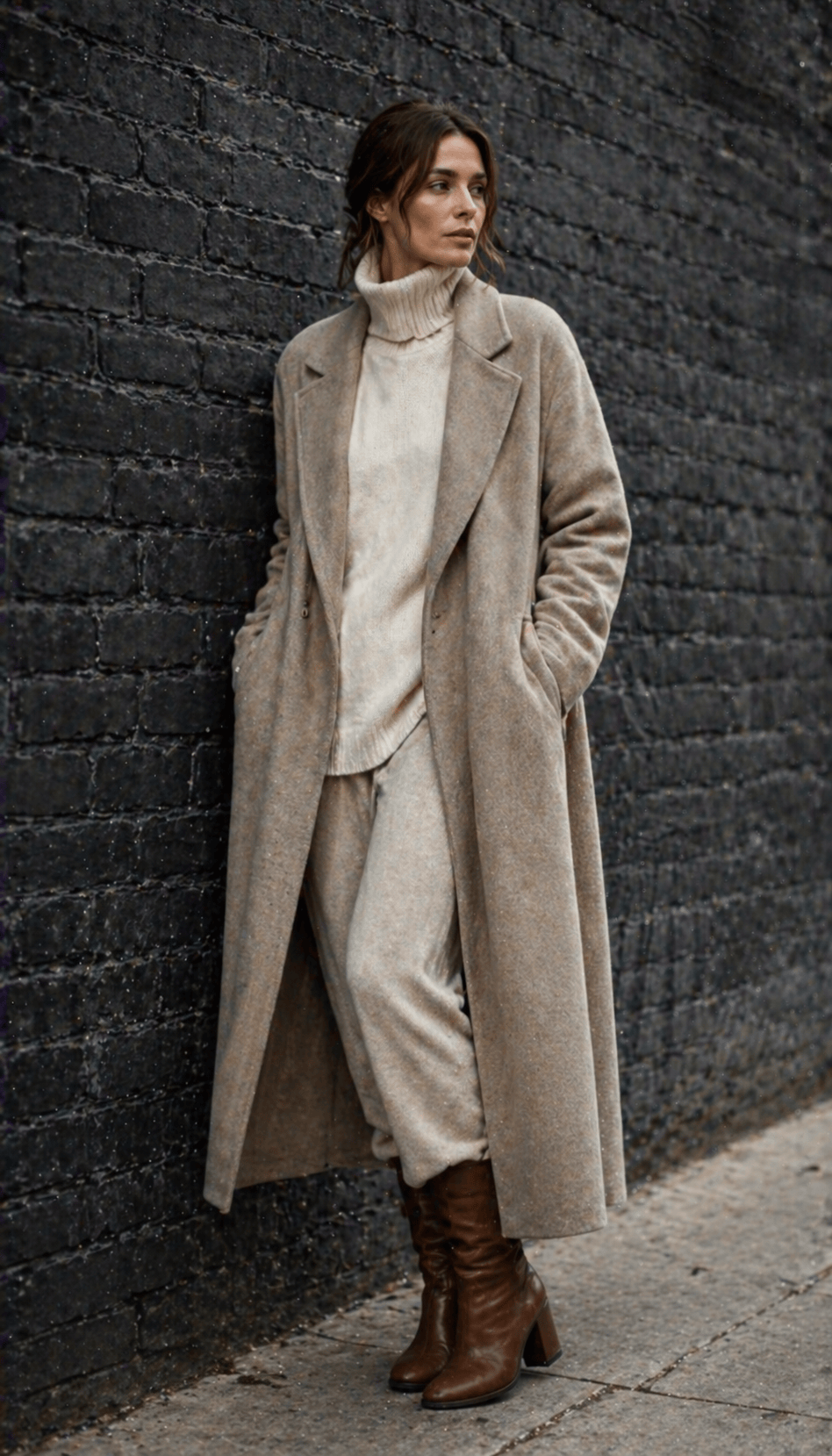
Charcoal knit, cream trouser. The camel coat does the work; the layers underneath set a quiet frame so the colour does not flatten.
First way: with a cream or ecru turtleneck and dark trousers. This is the tone-on-tone version of the same idea covered in our quiet luxury brands roundup, and it is the most-photographed look for a reason. The cream knit reads as a soft inner ring; the dark trouser grounds the silhouette so the camel does not float. Loafers in dark brown or burgundy finish it cleanly. Skip black shoes here; they fight the warmth of the coat.
Second way: with a charcoal or navy suit underneath. Worn this way the camel coat reads as proper outerwear, the role it played throughout the polo coat tradition. A grey wool trouser plus a knit or a button-down, then a darker overcoat layer would have been the conservative move; the camel sits a degree warmer and still reads as office-appropriate at almost any tier. For menswear styling notes on this exact ratio, our tailoring under $500 buyer guide covers the trouser-and-knit base that disappears cleanly under the coat.
“The camel coat is doing the work. Cream, charcoal, or navy underneath frames it. Black competes with it.”
Third way: thrown over jeans and a t-shirt. The camel coat is the rare outerwear piece that elevates denim without the contrast looking forced. A mid-rise straight-leg or relaxed selvedge (the case for which lives in our Japanese denim piece) reads more deliberate than a skinny under a long coat. White tee or cream knit, brown leather sneakers or loafers, and the coat carries the rest. This is the version that earns the coat its keep across a week of normal wear.
Black is the single colour that consistently flattens a camel coat. A black turtleneck plus black trousers under camel reads as a costume of the look rather than the look itself; the high contrast pushes the coat toward sandy-yellow and away from the warm honey tone that makes the shade work. Charcoal, navy, chocolate, cream, and most warm neutrals all sit better. The exception is a single black accessory (a leather bag, a low boot) which can break up the silhouette without flattening it.
Skip overly-structured shoulder pads. The 1980s power-coat version of camel (the era covered in Wikipedia's power dressing entry) is the one cut that always reads dated. The current silhouette is softer at the shoulder and roomier through the body, the same direction the rest of the tailoring market is moving in. The principles in our oversized blazer styling guide translate almost directly: less shoulder, more drape, length to mid-thigh or below.
The shade itself is widening. Most of the houses we cover are showing camel in a slightly cooler, more taupe-leaning hue than the saturated honey-camel that defined the 2017 to 2020 cycle. The cuts are also softening, in line with The Cut's liquid tailoring trajectory and the slow death of structured outerwear at the luxury tier. If you are buying one this season, the safer call is a wool-cashmere blend in a mid-saturation camel, double-breasted or wrap-fronted, hitting at or below the knee. That spec carries cleanly across at least the next three winters.
The base layer doing the most work under a camel coat is almost never the coat itself. A great knit and a clean trouser carry the rest of the outfit.
Sparingly. A single black accessory works; a head-to-toe black outfit under camel flattens the shade. Charcoal, navy, cream, or chocolate underneath sit better. Cross-shop the women's coats and jackets index for full looks.
What length camel coat is the most versatile?
Mid-thigh to just-below-the-knee. Cropped reads dated and longer reads dressier; the middle range works across denim and tailoring. The menswear jackets index covers the menswear cuts.
Wool, wool-cashmere, or camel-hair?
A wool-cashmere blend at 600 to 800 grams is the most practical: warm, drapes well, holds shape across winters. True camel-hair is softer and rarer, and the price is correspondingly higher. The case for spending on better fiber is the same one covered in our cashmere piece.
Does the camel coat work in spring weather?
A lighter 400 to 500 gram version carries through April. The full-weight winter coat retires by late March in most Canadian cities; for the shoulder season, our Montreal spring wardrobe covers what slots in next.