Buyer Guide
Why a good leather belt is the smartest buy of 2026
A full grain leather belt costs less than most sneakers, outlives nearly everything else in your closet, and quietly sharpens every outfit it touches. Here is how to buy one properly in 2026.
By Fetchi Editorial, Accessories Desk
15 min read
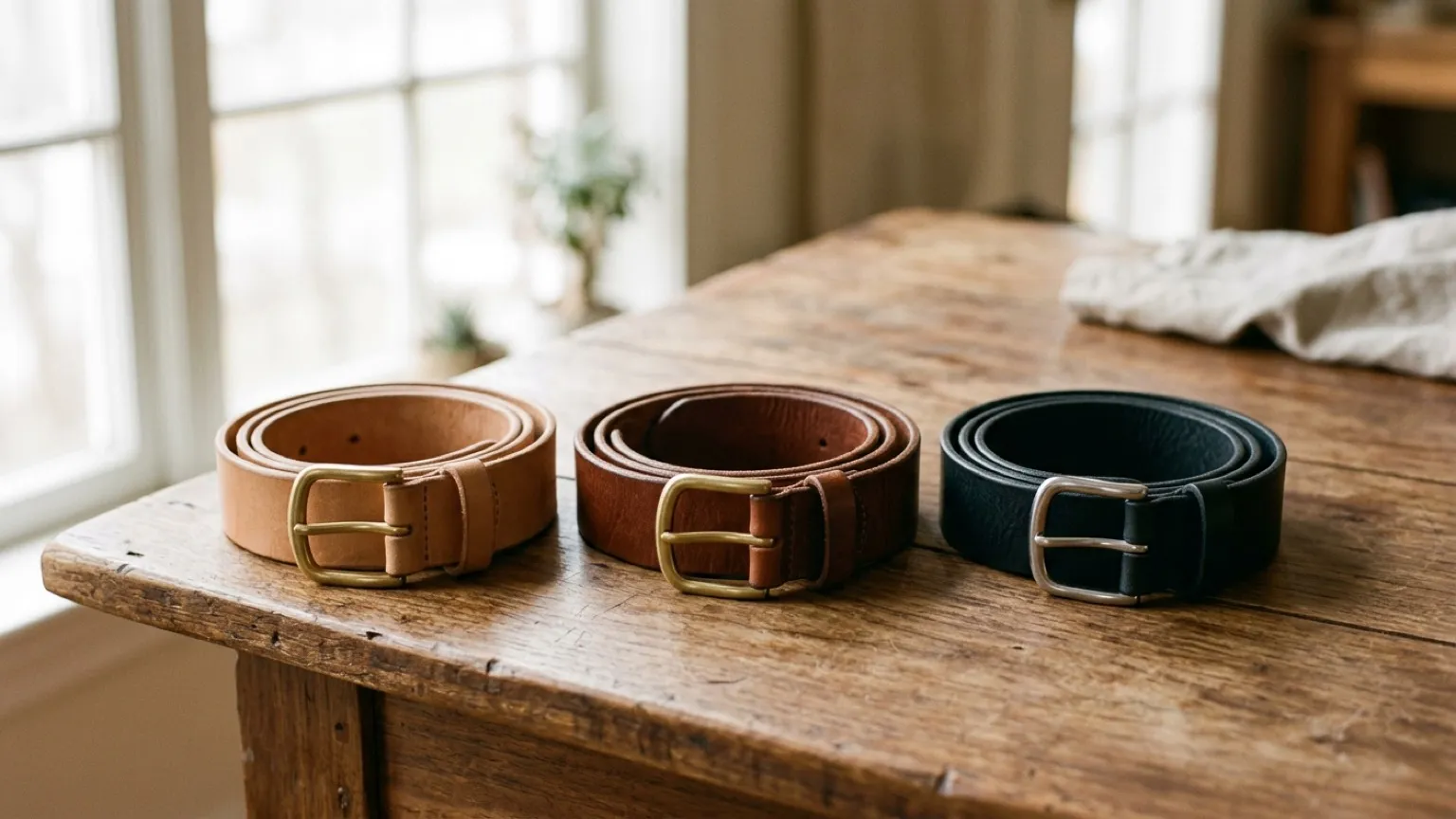
A good leather belt is the smartest buy of 2026 for one plain reason: it is the rare purchase that gets cheaper the longer you own it. A full-grain strap in the $90 to $150 range, the territory of makers like Tanner Goods, will outlast three or four bonded-leather belts that crack at the fold within two years. We tested that claim the slow way, wearing the same handful of belts through 2024 and 2025, and the full-grain pieces only improved, taking on a darker patina where the cheap ones surrendered. One well-made belt also covers denim, chinos, and most tailoring, so the cost per wear falls below nearly everything else in a wardrobe. In a year when wardrobe budgets are tight, that combination of durability and versatility is hard to beat.
Why a good belt outlasts almost everything you own
A good leather belt costs about 13 cents per wear over a decade, making it one of the cheapest items in your wardrobe on a per-use basis. Run the numbers with us: a $200 full grain leather belt, worn 150 times a year for ten years, works out to $0.13 each time you put it on. That is less than a stick of gum. The belt has earned this durability reputation over centuries of the belt's long history as functional dress, and modern full grain construction has only extended it. Full grain hides from tanneries like Chicago's Horween or England's J. & F.J. Baker routinely outlast the trousers they hold up.
Contrast that with the bonded leather belt hanging near the register at most fast fashion chains. Bonded leather is shredded scrap fused to a fabric backing with adhesive, and it typically delaminates within one to two years of regular wear. The math tells the whole story:
Typical price, Full grain belt: $150 to $250 (verified at publish, September 2026), Bonded leather belt: $25 to $40. Realistic lifespan, Full grain belt: 10 to 20 years, Bonded leather belt: 1 to 2 years. Cost per wear over 10 years, Full grain belt: About $0.13, Bonded leather belt: About $1.00 or more, after repeat purchases. End state, Full grain belt: Develops patina, holds shape, Bonded leather belt: Cracks, peels, lands in a bin.
Buy the cheap belt five times over a decade and you have spent more money for the privilege of owning a worse object the entire time.
This is the thesis of our entire Case For series: fewer, better purchases beat frequent, disposable ones, and the belt is the cleanest proof we know. It is also why the quiet luxury shift that took hold in 2023 has not loosened its grip heading into 2026. When visible logos gave way to material quality as the real status signal, the belt moved from afterthought to tell. Anyone can read a monogram; it takes a discerning eye to clock a burnished full grain edge, and that is precisely the point. We cover the labels leading this movement in our guide to quiet luxury brands worth knowing in 2026.
One housekeeping note we hold ourselves to: leather and pricing move with the commodity market, so every figure in this article carries the date we verified it. Where we could not confirm a current price, we say so rather than guess.
What separates a good leather belt from a cheap one
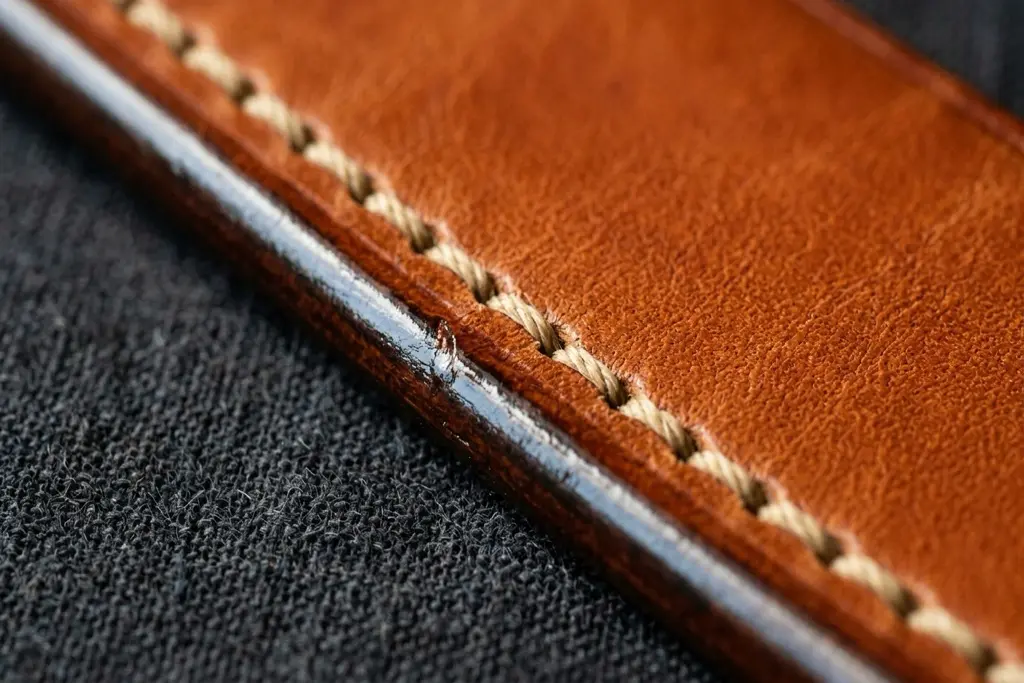
The difference between a belt that lasts thirty years and one that delaminates in eighteen months comes down to four things: the leather grade, the tanning method, the buckle metal, and the edge finish. Full grain leather, cut from the top layer of the hide with the grain intact, is the only grade we recommend for a good leather belt. Top grain has been sanded and corrected, which weakens it slightly, while bonded leather is shredded scrap glued to a fabric backing. And here is the trap most shoppers fall into: "genuine leather" is not a compliment. It is the lowest grade that can legally carry the word leather, and it sits below top grain in every measurable way.
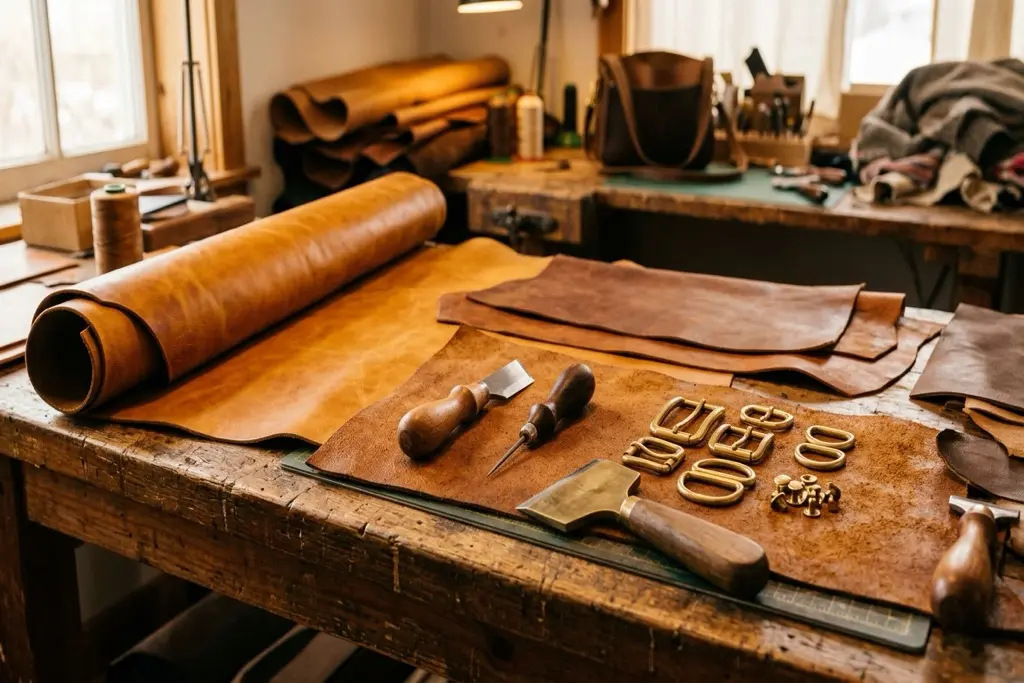
Tanning matters nearly as much as grade. Vegetable tanning uses tree bark tannins over several weeks, produces a firm strap that develops a rich patina, and avoids the chromium salts used in chrome tanning, which is faster and cheaper but ages less gracefully. If environmental impact concerns you, look for tanneries rated by the Leather Working Group, the industry body that audits leather producers on chemical management, water use, and traceability. Equus Leather in England and Tanner Goods in Portland both build belts from vegetable tanned hides sourced from audited tanneries, at roughly 195 dollars and 125 dollars respectively as of 2026.
Hardware is the component brands quietly cheapen. Solid brass and stainless steel buckles can be resized, repaired, and re-plated. Zinc alloy castings, the shiny buckles on most mall belts under 60 dollars, snap at the pin under stress and cannot be fixed. This is exactly the kind of material honesty that separates the quiet luxury brands worth knowing in 2026 from labels selling a logo on commodity components.
Here is how the markers stack up at a glance:
Marker: Leather grade, Buy this: Full grain, Avoid this: Bonded or "genuine leather". Marker: Tanning, Buy this: Vegetable tanned, LWG rated tannery, Avoid this: Unspecified chrome tanning. Marker: Buckle, Buy this: Solid brass or stainless steel, Avoid this: Zinc alloy casting. Marker: Edges, Buy this: Burnished, or painted and stitched, Avoid this: Raw edges sealed with glue.
Edge finishing is the fastest tell in person. Run a thumb along the strap: a burnished edge feels like polished stone, and a painted, stitched edge shows tight, even stitching. A raw glued edge feels fibrous and will fray first. When we evaluate any full grain leather belt, we check the edge before we ever look at the price tag, because a maker who burnishes edges has almost always done everything else right too.
The belts worth buying in 2026, at every budget
The right belt exists at every price point in 2026, and paying more past 400 dollars buys design, not durability. That is the single most useful fact in this category: a full grain leather belt with a solid brass buckle performs the same mechanical job at 90 dollars as at 900. What changes as you climb is hardware finishing, leather provenance, and how much of the price is the name on the box. All prices below were verified at publication in September 2026.
Budget: Under $150, Our picks: Uniqlo Italian leather, Meermin, Typical price: $40 to $120. Budget: $150 to $400, Our picks: Anderson's woven and box calf, Maximum Henry, Tanner Goods, Typical price: $160 to $350. Budget: $400 to $800, Our picks: Lemaire obi and knotted styles, Dries Van Noten seasonal, Toteme double clasp, Typical price: $420 to $780. Budget: Above $800, Our picks: The Row, Bottega Veneta intrecciato, Hermes reversible, Typical price: $850 to $1,400.
Under 150 dollars, Uniqlo's Italian leather belt is genuine vegetable-tanned hide at a volume price, though the buckle plating can wear within a few years. Meermin applies its shoemaking margins to belts, so you get shell-quality finishing; what you give up is hardware weight.
From 150 to 400 dollars sits the best value band. Anderson's woven elastics and box calf are made in Parma by a family firm, and you pay for construction, not marketing. Maximum Henry's Brooklyn-made straps justify their price with thick single-piece leather; the minimal buckle is a taste call, not a quality one. Tanner Goods uses hides from certified tanneries, and checking a maker against Leather Working Group tannery standards is a fast way to separate real quality claims from copy. This band is where most of the best belts for men 2026 lists concentrate, for good reason.
From 400 to 800 dollars you are buying design language. Lemaire's obi and knotted styles earn the premium through pattern-making you cannot get elsewhere; the leather itself is not categorically better than Anderson's. Dries Van Noten seasonal belts justify the spend as collectible pieces, though resale is unpredictable. Toteme's double clasp is a signature silhouette, and you pay roughly 200 dollars for that recognition.
Above 800 dollars, The Row charges for restraint and near-invisible construction; see where to buy The Row for current stockists. Bottega Veneta's intrecciato weave is genuine hand labor, the rare case where the price maps to hours. The Hermes reversible is two belts in one and holds value, but you are paying at least half the price for the H.
Prices for the same style vary widely between retailers, sometimes by 30 percent in the same week. Search any of these on Fetchi to compare every stockist's live price before you commit.
A good leather belt costs about 13 cents per wear over a decade, making it one of the cheapest items in your wardrobe on a per-use basis.
How to choose the right belt size and width
The sizing rule is simple: buy a belt 2 inches, roughly 5 centimetres, larger than your trouser waist size. A 32-inch waist takes a size 34 belt, which lands the pin in the middle of five holes and leaves room to adjust in either direction. We see more returns caused by ignoring this rule than by anything else, because a belt that closes on its first or last hole always looks borrowed.
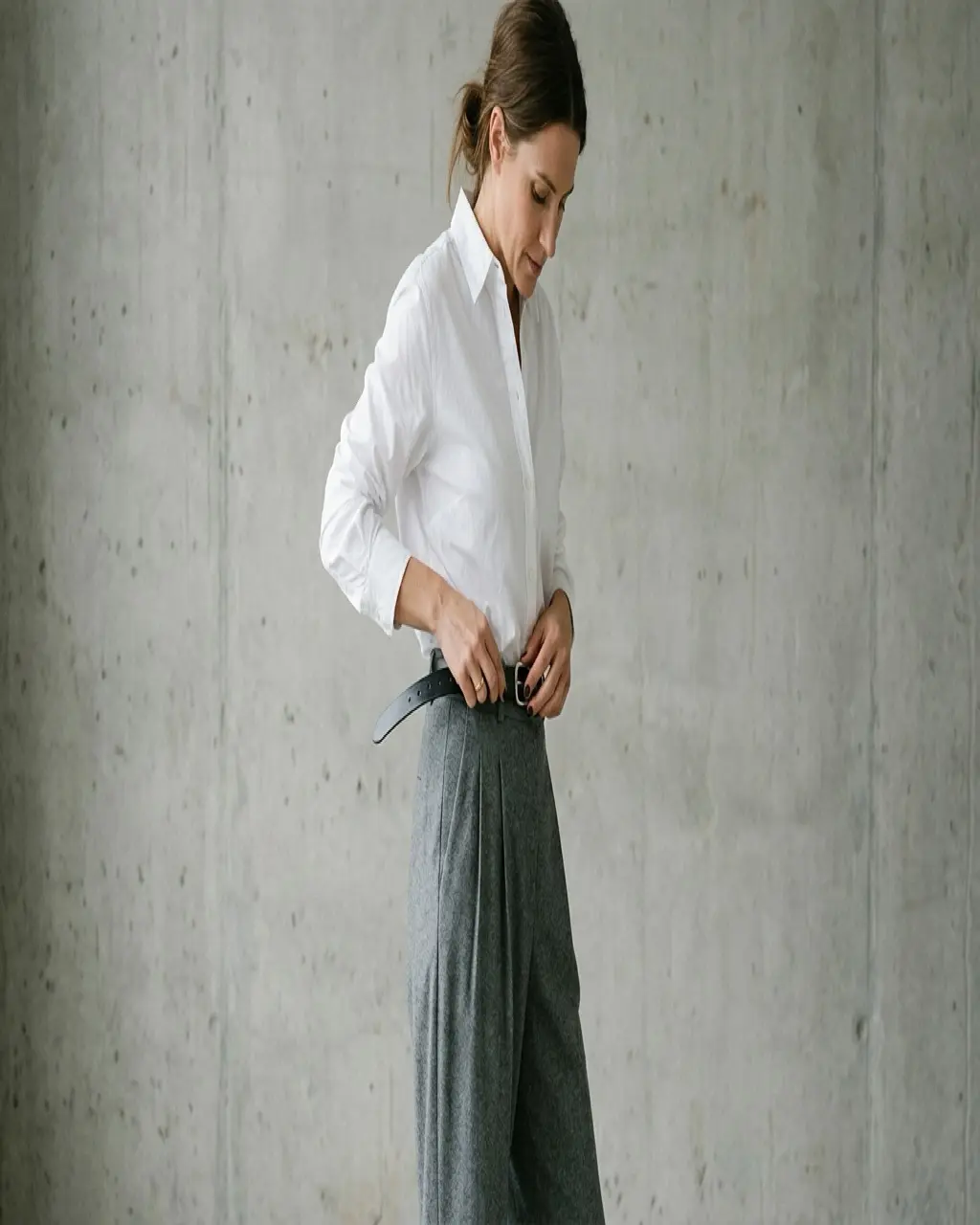
Width matters just as much as length, and it follows the trousers. For tailoring and dress trousers, stay between 3 and 3.5 centimetres, the range Anderson's of Parma has built its dress line around for decades. For denim and casual chinos, 3.8 to 4 centimetres fills the wider belt loops of a pair of Levi's 501s properly. Wider statement widths, 5 centimetres and up, belong over dresses, knits and outerwear, a proportion that showed up repeatedly in the spring 2026 collections on Vogue Runway. If that runway silhouette appeals, the Lemaire obi belt remains our favourite executed version, and our guide to where to buy Lemaire in North America covers current stockists. Obi and wrap styles are the one category where the two-inch rule relaxes, since they tie rather than pin.
European labels complicate things by sizing in centimetres rather than inches, and the number refers to the belt's usable length, not your waist. The most reliable method is to measure a belt you already own: lay it flat and measure from the fold where the leather meets the buckle to the middle hole. That figure in centimetres is your European size; divide by 2.54 for the US equivalent.
Trouser waist (US): 30, Belt size (US): 32, European size: 80 cm. Trouser waist (US): 32, Belt size (US): 34, European size: 85 cm. Trouser waist (US): 34, Belt size (US): 36, European size: 90 cm. Trouser waist (US): 36, Belt size (US): 38, European size: 95 cm. Trouser waist (US): 38, Belt size (US): 40, European size: 100 cm.
One caveat before you order: brands cut differently, and a full grain leather belt will not stretch to forgive a bad guess the way a cheap bonded one sags into it. Saint Laurent runs true to the chart above, while Anderson's tends generous by about 2 centimetres. When a good leather belt is meant to last fifteen years, five minutes with a tape measure is the cheapest insurance you will ever buy.
How the 2026 collections put the belt back at the centre
We have watched the belt migrate from afterthought to thesis. Across the fall 2025 and spring 2026 seasons, Vogue Runway's coverage kept returning to the same gesture: a waist cinched hard over tailoring, often over the coat itself. The belt is now the pivot point of proportion in contemporary tailoring, the single accessory that decides whether an oversized silhouette reads as deliberate or as drowning. That is why we keep calling a good leather belt the smartest buy of the year rather than a footnote to one.
The runway signals worth acting on distilled to four moves, all of them wearable off the catwalk:
**Belting over outerwear.** Wool coats and long blazers cinched at the natural waist, turning a straight column into an hourglass without a single alteration. **The double wrap.** Longer straps circled twice, or worn with a deliberate overhang of tail past the buckle. This favours narrower widths, around 2.5 to 3 centimetres, and supple full grain leather that folds without cracking. **Wider Western-influenced buckles.** After several seasons of near-invisible hardware, sculptural and engraved buckles returned as the focal point of otherwise quiet looks. **Contrast against volume.** The bigger the shoulder, the more the waist needs an anchor. We covered the clothing half of this equation in our guide to how to style an oversized blazer; the belt is the other half.
None of this requires runway spending. The styles that appeared cinched over tailoring are, structurally, the same braided and bridle-leather designs that makers like Anderson's, the Parma belt maker founded in 1966, have produced for six decades, most in the $150 to $250 range. A woven Anderson's stretches naturally to the double-wrap look, and the Western revival is well served by makers like Tanner Goods, whose heavier 1.5 inch straps take a statement buckle without buckling under it, so to speak.
Our practical read: buy for the waist, not just the trouser loops. The trend-defining looks of 2026 sit at the natural waist, over layers, which typically means sizing up 2 to 4 inches from your usual belt size or choosing a style with generous extra length. A best belts for men 2026 shortlist that ignores this misses the point. The proportional logic we laid out for tailored trousers applies here in reverse: the trouser sets the line, and the belt decides where the eye lands on it.
The belt is now the pivot point of proportion in contemporary tailoring, the single accessory that decides whether an oversized silhouette reads as deliberate or as drowning.
Caring for a leather belt so it lasts a decade
A full grain leather belt needs almost no maintenance, which is exactly why so many owners give it the wrong kind. Vegetable tanned leather asks for conditioning just two to three times a year: a thin coat of a neutral cream like Saphir Renovateur or Bick 4, worked in with a soft cloth and buffed off after ten minutes. More than that and you oversaturate the fibres, which softens the belt and stretches the holes. We also rest our belts the way we rest welted shoes, giving each one a day off between wears so the leather can release moisture and spring back.
Storage is where most damage actually happens. A few habits cost nothing and add years:
Hang the belt by its buckle or roll it loosely, never fold it, since a hard crease in veg-tan leather is permanent. Keep it away from radiators, heat vents and car dashboards. Dry heat above roughly 40 degrees celsius cooks the oils out and leads to cracking. Store it out of direct sun unless you want the tan to deepen unevenly.
Learn to read the difference between patina and damage. Patina is even: the leather darkens a shade or two, the edges burnish where they pass through the buckle, and the surface takes on a low sheen. Damage is local and structural: deep cracks that catch a fingernail, holes stretched into ovals, or a strap that stays limp when you flex it. The first is the reason people buy a good leather belt in the first place. The second is a repair ticket.
And repairs are cheap relative to replacement. A cobbler can punch a clean new hole for around 15 dollars, re-edge and burnish a worn strap for 25 to 35 dollars, or swap a buckle for 20 to 40 dollars, prices we treat as estimates to verify at publish. On a 120 dollar Tanner Goods or 90 dollar Equus strap, any of those is obviously worth it. We only replace when the leather itself has failed: cracking through the grain, a tear at the buckle fold, or stretch so severe the belt no longer sits flat. Hardware, holes and edges are all serviceable. The strap is the belt, and if the strap is sound, keep it.
How to shop for a belt across retailers without overpaying
Here is the honest version of the pitch we make every day: the belt you have already chosen is almost never sold in one place. A single Anderson's woven leather belt or Lemaire obi belt is typically stocked by four or more retailers at once, and those retailers rarely agree on price. Currency, region, and markdown calendars all pull in different directions, which means the exact same good leather belt can vary meaningfully in price on the same afternoon. Checking two or three stockists before buying is the single easiest way to avoid overpaying.
Belts also behave unusually well in sale season. Because most run in simple centimetre or inch increments rather than fussy garment sizing, retailers treat them as size flexible inventory: a size 85 fits a wide band of customers, so belts linger on sale pages longer and get marked down in deeper waves than tailoring or footwear. That is why we keep an eye on current markdowns across retailers from late June and late December onward, when the first markdown wave lands, and again a few weeks later when remaining stock drops further. We will not promise a specific percentage, because it shifts by retailer and season, but the pattern of belts surviving into later markdown rounds is consistent year after year.
The search itself takes about two minutes:
Start from the maker, not the retailer. Browse all designers on Fetchi, open the brand page for Anderson's, Lemaire, Dries Van Noten, or whoever made your shortlist, and you see every stockist carrying that label side by side. Match the exact style, not just the brand. Compare leather, buckle finish, and width in the product photos, since a 3 cm and a 3.5 cm version of the same belt are different listings at different prices. Note the currency and shipping origin. A lower sticker price from an overseas stockist can close the gap once duties arrive, so compare the landed cost, not the headline. Check the sale page last, every time. Full price listings and marked down listings of the same belt often coexist for weeks.
This is the whole case for buying investment accessories this way. The belt does not change. Only the price does, depending on where and when you look. Before you commit to any of the belts we named earlier, search the full Fetchi catalog for the style, line up every stockist price on one screen, and buy the same belt for less.
A good leather belt is one of the few purchases left that gets cheaper every year you own it. We have spent this guide comparing construction, sizing, pricing, and the 2026 collections, and the conclusion holds at every budget: full-grain leather on a solid buckle beats anything else you can spend the money on. Here is what we would do with that information today.
Inspect the edge and the back before anything else. A finished edge and a clean, unpainted underside tell you more in ten seconds than any product page. If you see fabric, foam, or a stamped "genuine leather" label, put it down.
Size from a belt you already wear. Measure from the buckle fold to the hole you actually use, then buy the belt that puts that measurement at the middle hole. You get adjustment room in both directions and a strap that sits correctly from day one.
Buy once, then maintain on a schedule. Condition the leather twice a year, store it flat or hanging, and rotate two belts if you wear one daily. A well-made strap in the $90 to $150 range, treated this way, will outlast five cheap replacements and look better doing it.
Fewer belts, better leather, a decade of use. We think that is the smartest kind of buying there is.
Frequently asked
- Are expensive belts worth it?
- A belt between 150 and 400 dollars is usually worth it because that price buys full grain leather and solid hardware, which last 10 to 20 years with basic care. Above that range you are paying mostly for design and brand rather than durability. Bonded leather belts under 50 dollars typically delaminate within one to two years, so they cost more per wear.
- What is the best leather for a belt?
- Full grain, vegetable tanned leather is the best choice for a belt. It keeps the hide's natural surface, so it resists cracking and develops a patina instead of wearing out. Avoid anything labelled genuine leather or bonded leather, since those are the lowest grades and break down quickly.
- How do you choose the right belt size?
- Buy a belt about 2 inches, or 5 centimetres, larger than your trouser waist size so the pin lands in the middle hole. If you already own a belt that fits, measure from the fold at the buckle to the hole you use and match that length. European belts are sized in centimetres, so a 32 inch waist usually takes an 85.
- What width should a dress belt be?
- A dress belt should be 3 to 3.5 centimetres wide, which is roughly 1.25 inches. That width sits cleanly in the belt loops of tailored trousers and reads as formal. For denim and casual trousers, 3.8 to 4 centimetres is the standard.
- How long should a good leather belt last?
- A full grain leather belt should last 10 to 20 years with light care, and many last longer. Conditioning the leather two or three times a year and resting it between wears extends its life. Repairs like new holes or a buckle swap are inexpensive, so a good belt rarely needs replacing.
More from Fetchi
Related reading
Buyer Guide
Where to Buy Dries Van Noten in 2026: Full Guide
Dries Van Noten now runs on a design collective rather than a founder, and the stockist map has shifted with it. Here is where the collections actually land in North America in 2026, and what each channel costs you.
Read
Buyer Guide
Best Sweaters Under $500 in 2026, Ranked by Knit
We ranked the best sweaters under $500 for 2026 by what actually matters: knit gauge, fiber quality, and seam construction. From full-fashioned cashmere to chunky lambswool, here is where your money buys real longevity.
Read
Buyer Guide
Best AI fashion search engine in 2026
Search assistants now answer fashion questions directly. We ranked the platforms that actually answer those questions well, what each one is good for, and where Fetchi fits in the landscape.
Read