Trend
The case for investing in cashmere in 2026
Cashmere has become a market full of shortcuts. Here is what separates a piece worth ten years from one that pills by month three.
By Fetchi Editorial
6 min read
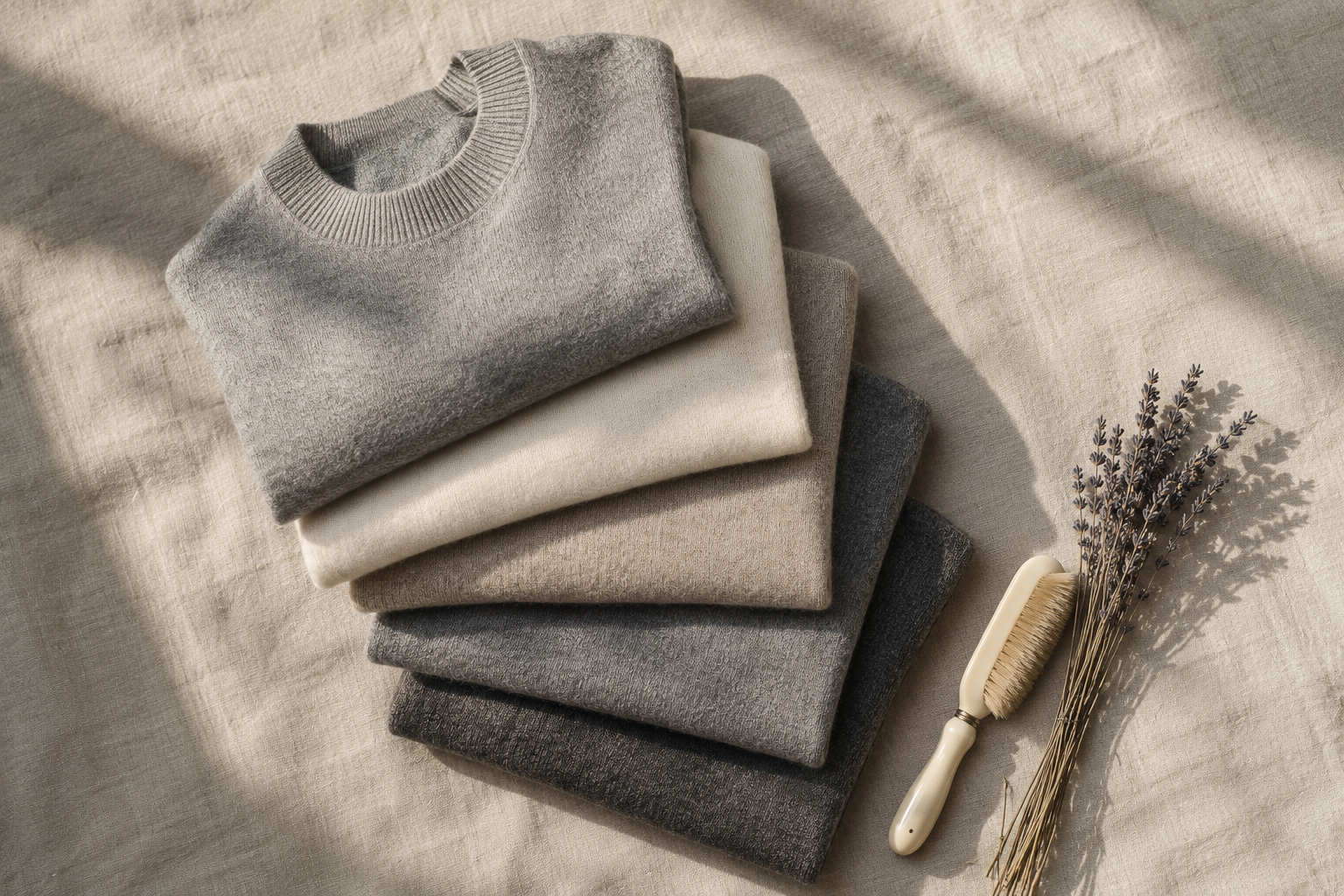
Cashmere is the wardrobe category most distorted by mass-market pricing. A $90 cashmere sweater from a department store and a $900 cashmere sweater from a heritage knitwear house are both, technically, labeled the same fiber. They are not the same garment, and the difference is not branding. It is fiber length, ply count, knit density, and finishing. Four variables together explain why one piece pills by week three and the other passes through a decade of winters intact.

This piece is the case for spending more on fewer cashmere pieces. The thesis lines up with our argument for unbranded basics: construction is the value, not the logo, and the gap between bad cashmere and great cashmere is more visible than the gap between most labels.
What actually makes cashmere worth the spend
Fiber length first. Cashmere fiber is graded by length, and longer fibers (36mm and up) produce a yarn that resists pilling because there are fewer fiber ends sticking out of the surface. Shorter fibers, often labeled "grade B" cashmere, are cheaper to source and are the reason a $90 sweater pills in a month. The best Inner Mongolian and Alashan cashmere is in the 36-42mm range; the cheapest commercial cashmere is closer to 28mm. Brands rarely list this on the label, but the price tier is a reliable proxy.