The case for buying second-hand luxury bags in 2026 | FETCHI
Trend
The case for buying second-hand luxury bags in 2026
Pre-owned is the only register where the math on a $4,000 bag actually pencils. A buyer guide to the houses, the platforms, and the tells.
By Fetchi Editorial, Womenswear desk
5 min read
The new-luxury bag market has spent the last three years pricing itself into a corner. The flagship shapes at the heritage houses have crossed the $4,000 threshold; the contemporary tier has crept past $1,500; and the spread between retail and any honest read on construction has gotten wide enough that the pre-owned register is the only place the math still pencils. A five-year-old Loewe Puzzle in good condition trades at roughly half of its current retail price. The leather is broken in, the hardware is solid brass that has aged rather than chipped, and the construction is from a production window that most observers consider tighter than the current one. The case for buying second-hand in 2026 is no longer a sustainability argument dressed up as a price argument; it is a quality argument that happens to also be cheaper.
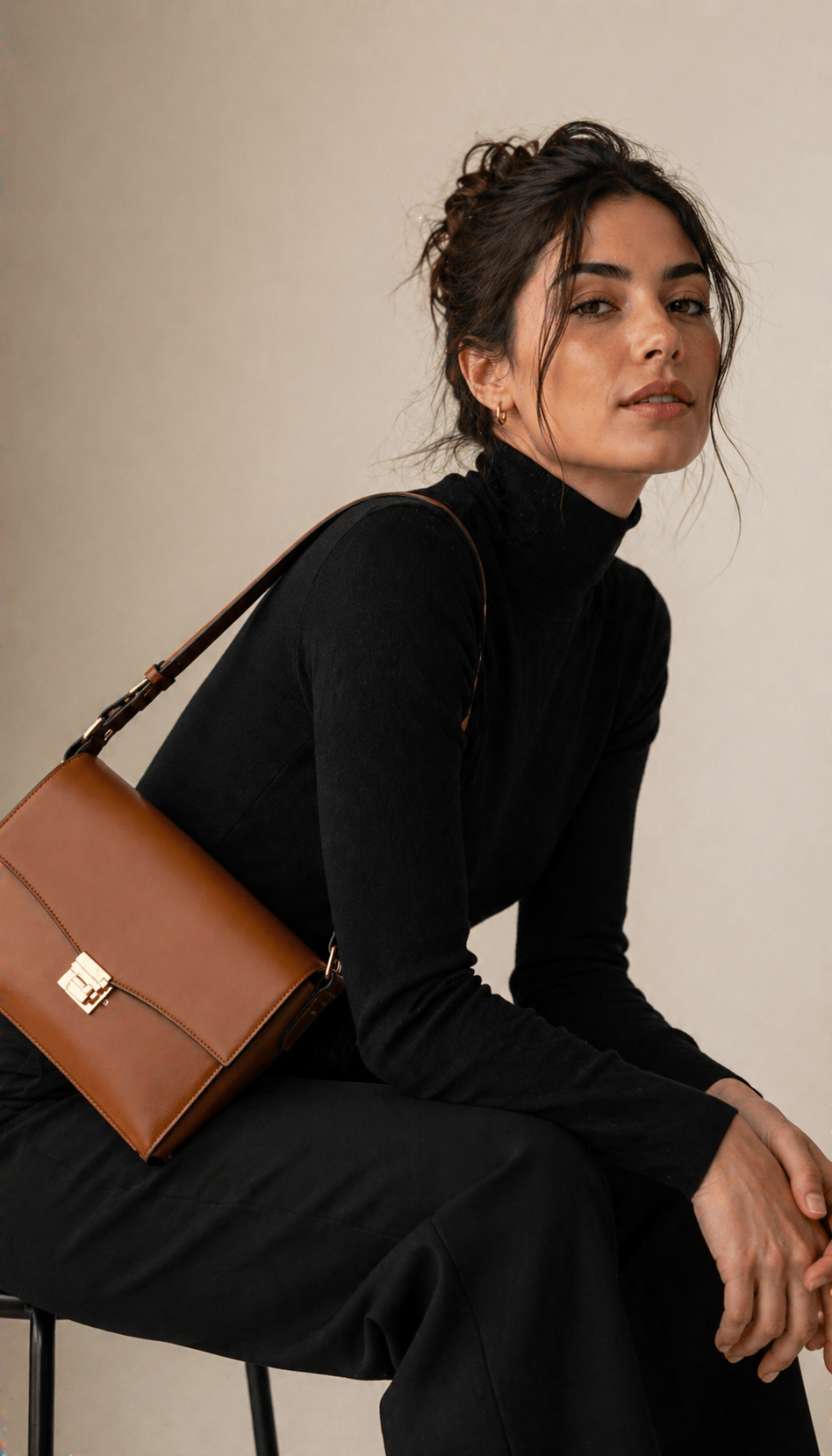
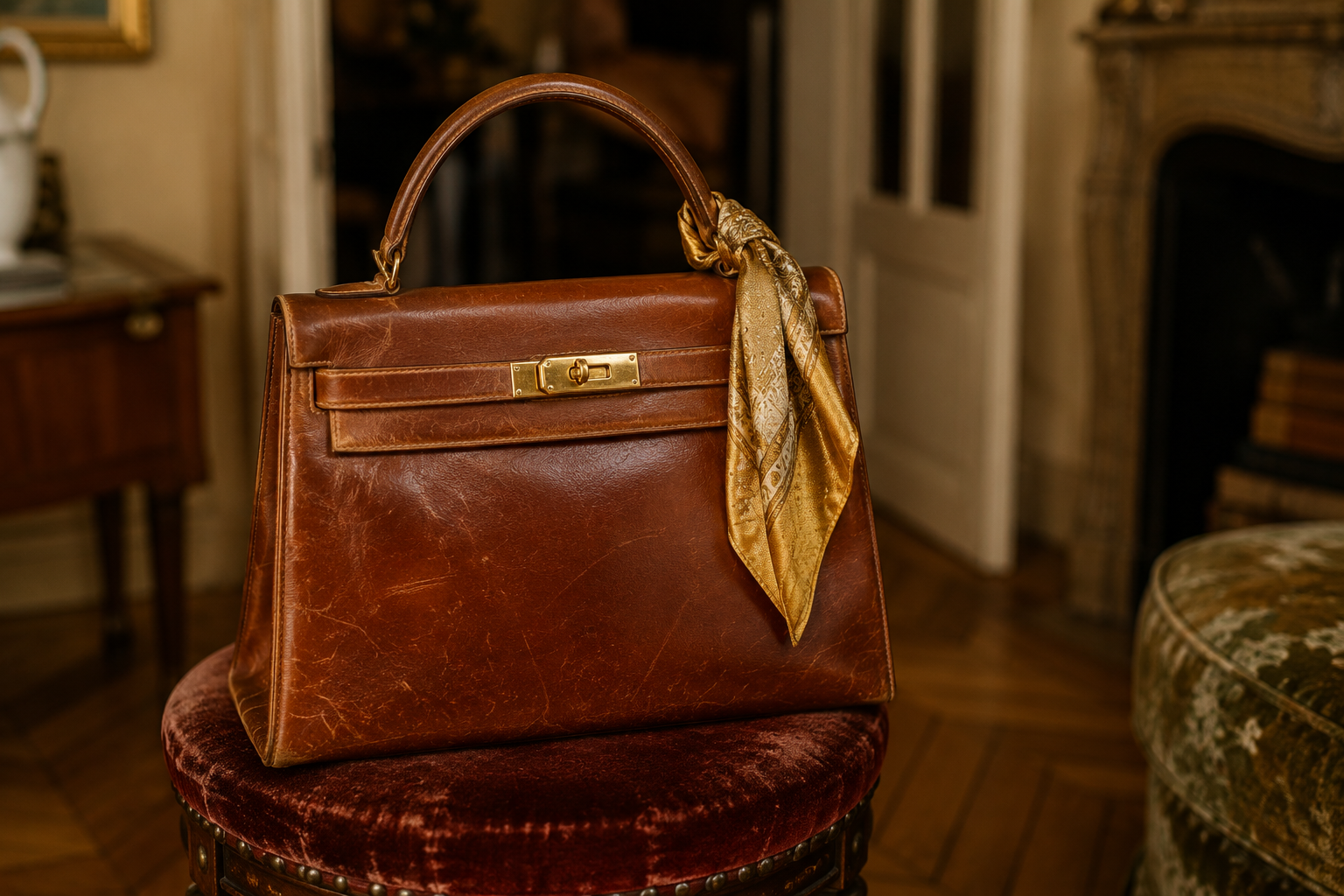
A bag worn for five years carries a patina the new piece cannot fake. Pebbled leather rewards the resale buyer more than smooth calf.
This piece is a buyer guide for the pre-owned luxury bag market. The thinking lines up with our case for buying vintage in 2026 and our case for a single good handbag: the heritage houses produce the pieces that hold up, the secondary market re-prices them honestly, and the wardrobe that results is more coherent than the one a comparable new-purchase budget builds.
Why the secondary market re-prices the field honestly
The pricing on a new luxury bag is doing two jobs at once. The first is paying for the leather, the construction, and the brand overhead. The second is paying for the in-store experience, the seasonal campaign, and the option value of a current colorway. The secondary market strips out the second job and prices the first one directly. A five-year-old Loewe Puzzle in caramel calfskin, in good structural condition, trades at $1,400 to $1,800 against a current retail of $3,300 to $3,500. The Row Margaux 15 from the 2022 to 2023 production window trades at $3,500 to $4,200 against a current retail of $5,900. The Lemaire Croissant in cognac trades at $900 to $1,100 against a $1,750 retail. The discount is real and the construction window is, in most cases, the equal of or stronger than the current one.
The houses where the resale math works hardest are the heritage and quiet-luxury names covered in our quiet luxury brands roundup. The Row, Loewe, Lemaire, Toteme, Bottega Veneta, and Hermes all hold 40 to 70% of their original retail across a five-year window. The contemporary tier (Polene, Strathberry, Mansur Gavriel, and the cluster around them) holds 10 to 25% over the same period, which is the side of the market where buying new makes more sense because the resale arbitrage is not large enough to offset the condition risk.
“Pre-owned is no longer a sustainability argument dressed up as a price argument. It is a quality argument that happens to also be cheaper.”
Three platforms carry most of the credible inventory in North America. Vestiaire Collective handles the largest volume and runs a paid authentication step on any piece above a price threshold; the platform is the most useful for breadth across houses and the most variable on condition reporting. The RealReal is the strongest on consistent in-house authentication and condition photographs and the weakest on price; the spread between The RealReal asking prices and Vestiaire asking prices on identical pieces is often 15 to 25% in The RealReal's favor, which is a tax for the lower condition risk. Fashionphile is the most curated of the three and the most selective on which pieces it lists; the inventory skews heavily toward Hermes, Chanel, Louis Vuitton, and the bag-first heritage houses, with less of the quiet-luxury register than the other two.
For Canadian buyers specifically, duty and currency math swings the calculation. A bag bought from a US platform and shipped to Canada attracts 5 to 13% GST/HST depending on province plus, in many cases, a customs duty in the 8 to 18% range on leather goods. Vestiaire Collective's European inventory often lands cheaper after the full landed cost than equivalent US pieces because the EU-to-Canada duty math is friendlier than the US-to-Canada math on identical leather. The math is worth running on a per-piece basis before committing.
The pre-owned register rewards pebbled leather more than smooth calf. The scratches that scare new buyers age into the bag rather than the buyer.
Five condition checks separate a pre-owned bag worth keeping from one worth skipping. Corners first. The corners of a leather bag carry the most wear and are the single hardest area to refurbish; light rubbing is fine, but any exposed substrate or cardboard means the bag is past the point where a craftsman can save it without a visible repair. Strap join second. The stitching at the point where the strap meets the body is the structural pressure point; loose or broken stitches mean the bag has been under-load for years and the repair is more cosmetic than structural.
Interior lining third. A lining with ink stains, makeup smears, or pen marks is a normal wear signal; a lining that has been replaced is a re-conditioning signal that often hides deeper problems and is worth a direct question to the seller. Hardware fourth. Solid brass clasps that have aged to a darker honey tone are a quality signal; plated zinc that has chipped down to a silver underlayer is a non-starter on a piece you plan to keep. Smell fifth. A pre-owned bag with a strong smoke, mildew, or cologne smell almost never airs out fully; condition reports rarely mention smell, and it is the single most-returned reason on the secondary market.
Corners and hardware are the tells. Pebbled corners with light rub age well; exposed substrate at the corner is past the saveable line.
Two categories of pre-owned bag are almost never the right buy. Heavily branded canvas pieces are the first; the Louis Vuitton Speedy, the Coach Signature, and the Gucci GG canvas trade in deep volume and almost never appreciate, and the condition variance is wide enough that the secondary market is mostly a worse version of the primary one. Trend-cycle pieces are the second. The mini-bag wave of 2019 to 2021, the rhinestone-strap moment of 2022, and the silver-metallic stretch of late 2023 all produced pieces that look dated faster than they depreciate. The pieces that hold value across cycles are the structural shapes in neutral leathers, which is the same pattern documented in our case for a single good handbag.
Authentication is the other place where the pre-owned market loses buyers. The platforms named above all run authentication and most disputes resolve in the buyer's favor; the failure mode is buying from a peer-to-peer marketplace (eBay, Poshmark, Facebook) without an independent authentication step. If you are tempted by a piece outside the platforms, Entrupy and Real Authentication both offer paid third-party authentication for $20 to $50 per piece, and the cost is worth absorbing on any bag above $500. For the brand-specific guidance on where to cross-shop, the Loewe guide, the Lemaire piece, and the broader bags under $500 piece cover the registers.
Frequently asked
Which platform is the safest for a first pre-owned purchase?
The RealReal for the strongest in-house authentication and condition photography; Vestiaire Collective for the broadest selection across the heritage houses. Fashionphile is the most curated and the strongest on bag-first labels. Cross-reference current new pricing on our bags under $500 piece and the womenswear catalog.
How much should I expect to save vs retail?
On heritage-house bags in good condition, 30 to 55% off current retail across a five-year window. On contemporary-brand pieces, the savings are real but the absolute dollar amount is small enough that the condition risk often outweighs the discount. The math from our quiet luxury brands roundup applies here.
Are pre-owned bags as well-made as new ones?
In many cases yes, and in some cases better. The production windows of the late 2010s and early 2020s at the heritage houses are widely considered tighter than the current ones; a five-year-old piece often carries construction that the new-purchase price does not buy today. The thinking lines up with our case for buying vintage in 2026.
What about Hermes Birkins and Kellys on the secondary market?
The Hermes flagship shapes are the one category where pre-owned trades at or above retail, because the primary-market waitlist is functionally closed. The math is different from the rest of the register and the authentication stakes are higher. For the broader luxury context, our quiet luxury brands piece covers the houses that price more transparently.