Selvedge mills in Okayama still weave on shuttle looms that the rest of the world retired in the 1980s. Here is why that matters.
By Fetchi Editorial, Denim desk
6 min read
Japanese denim is the rare category where the romance and the reality line up. The mills in Okayama, Hiroshima, and Kojima never retired their old American shuttle looms when the rest of the global denim industry switched to projectile and air-jet weaving in the 1980s. Forty years later, those slower, narrower looms are the reason a pair of $300 Japanese jeans wears in differently than a $90 pair from a fast-fashion label. The fade pattern, the hand, and the longevity all trace back to a manufacturing choice the rest of the world walked away from.
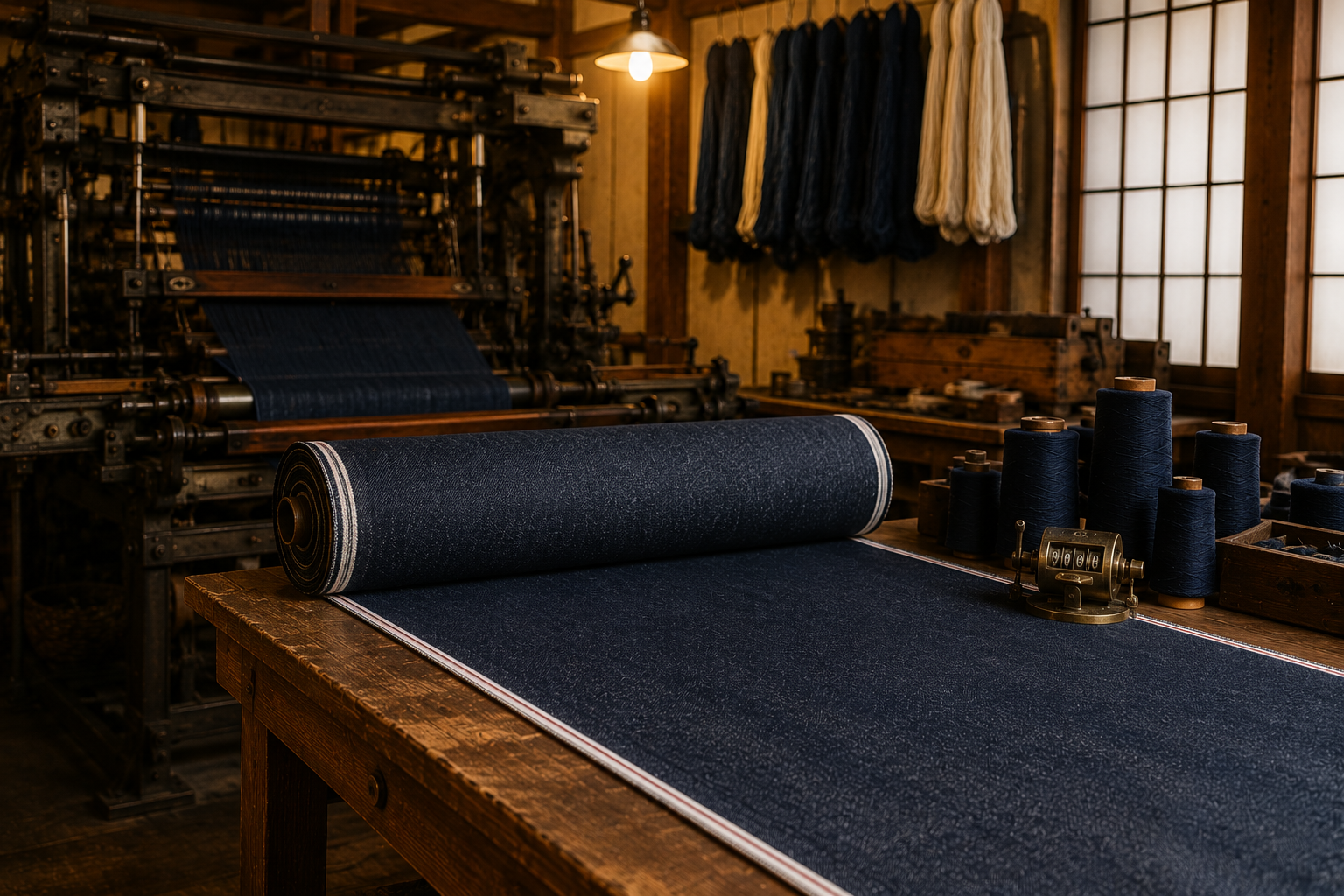
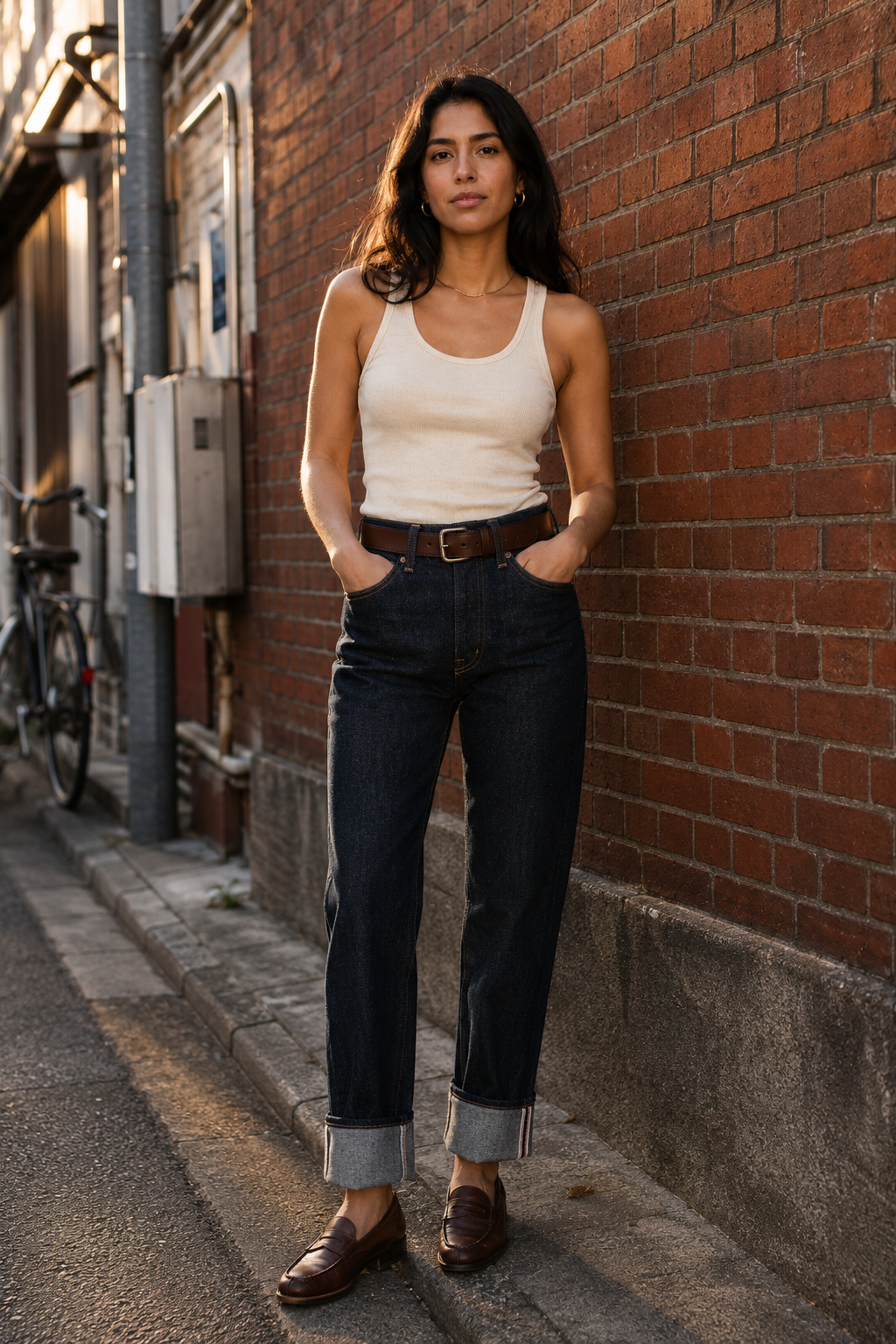
A shuttle loom weaves at roughly thirty-one inches wide, slow and slubby, with a self-finished selvedge edge that runs the length of every roll.
This piece is the long argument for why that matters, and where the category sits in 2026. The thinking lines up with our case for unbranded basics and the cashmere piece: construction is the value, not the label, and the gap between mass-market and mill-made is more visible than the gap between most contemporary brands.
Shuttle looms weave a narrower fabric, roughly 31 inches versus the 60 inches of a modern projectile loom, and they weave it more slowly. The slower beat-up rate produces a denser, more irregular weave with a softer hand and a self-finished edge (the selvedge) along both sides of the roll. That edge is the visible tell at the outseam of a pair of jeans, but it is a consequence of the loom type, not a decorative choice. The same loom also produces the slubby, uneven yarn surface that breaks in into the high-contrast fade pattern Japanese denim is known for.
Indigo dyeing is the other half of the story. Most commercial denim is rope-dyed in synthetic indigo with sulphur bottoming to deepen the shade quickly and cheaply. The Okayama mills still rope-dye in pure indigo without sulphur, which means the dye sits closer to the surface of the cotton and abrades off faster in wear zones. That is what produces the dramatic whisker, honeycomb, and stack fades that Japanese denim collectors care about. A pair of synthetic-indigo jeans will fade evenly into a flat blue; a pair of pure-indigo Japanese jeans fades into a topographic map of how its owner sat, walked, and folded for a year.
“A pair of synthetic-indigo jeans fades into a flat blue. A pair of pure-indigo Japanese denim fades into a topographic map of a year of wear.”
The Japanese denim landscape splits into two layers. The mill-owned heritage labels (the long-running Osaka and Okayama houses) sell their denim under their own names through specialist boutiques and brand-direct e-commerce. The contemporary labels (the brands we covered in our quiet luxury roundup and the Acne and Lemaire pieces) source from those same mills but cut to a more current silhouette. Both layers are worth knowing. The heritage labels run truer to mid-century American workwear cuts; the contemporary labels translate the fabric into looser, more current proportions.
For live cross-retailer pricing on selvedge and Japanese-mill denim across our partners, the grid below pulls what is in stock right now. Sort is cheapest first; treat the list as a working shortlist rather than a static recommendation. The menswear catalog and the broader products index carry the rest of the market if you want to compare against non-Japanese options.
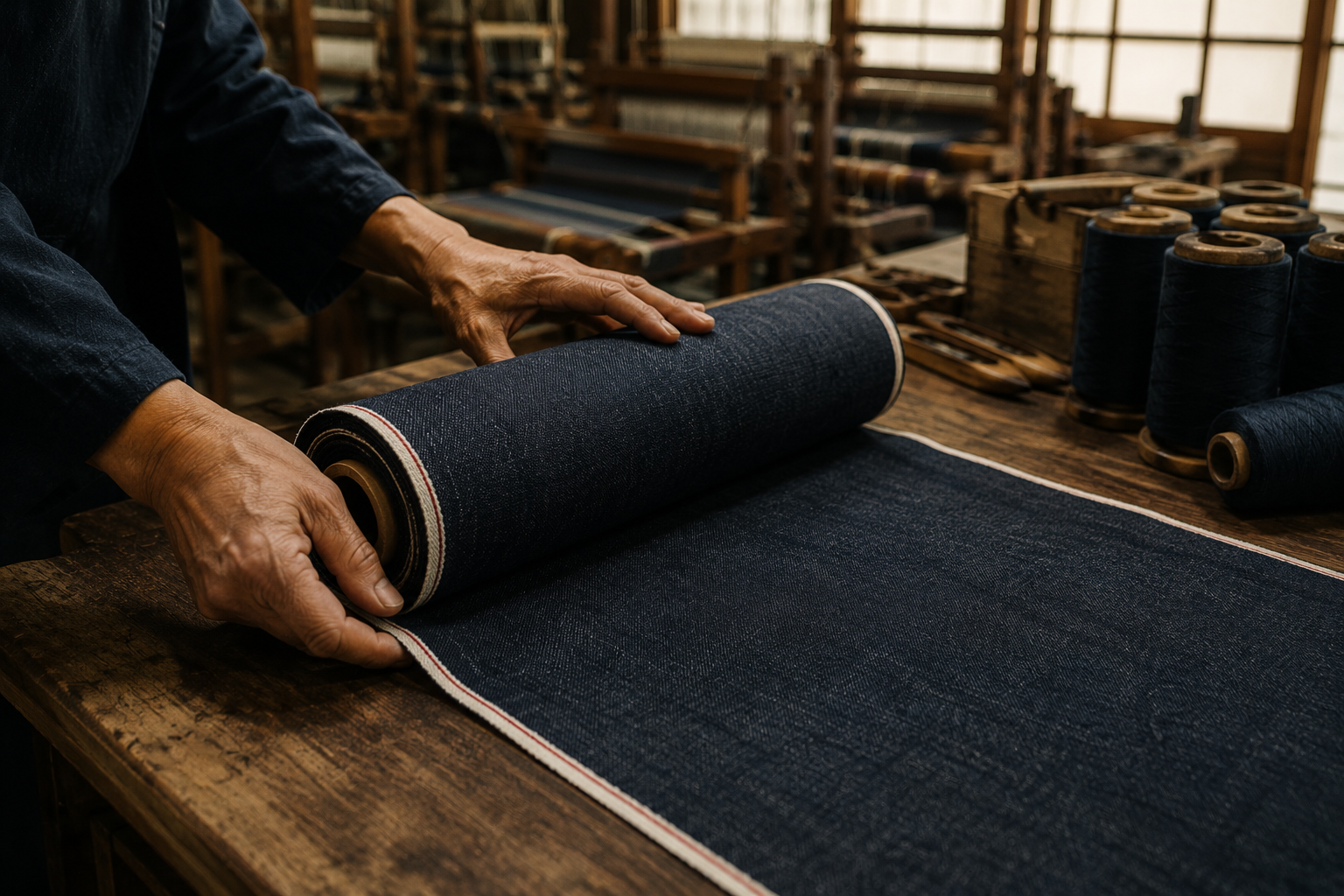
Three months of daily wear before the first soak. Honeycomb fades behind the knee and whiskers at the hip are the record of how a year was spent.
Raw, unwashed Japanese denim is sold with the dye still loose and the cotton at full length. The break-in period (the first three to six months of wear before the first wash) is when the fades develop. Most collectors wear a raw pair daily for at least three months before any contact with water, then soak cold to set the shrinkage and lock in the fade pattern. Pre-washed and one-wash pairs skip the most dramatic part of this cycle but are forgiving for first-time buyers; they shrink and bleed less, and they look closer to a normal pair of jeans out of the bag.
Sizing depends on whether the denim is sanforized (pre-shrunk) or unsanforized (shrink-to-fit). Sanforized denim shrinks roughly 1-3% on the first wash and can be sized true to your usual waist. Unsanforized denim shrinks 5-10% and needs to be sized up two inches in the waist and three in the inseam. The product listing should flag which it is; if the description does not, assume sanforized for any pair under $250 and verify before ordering. For sizing reference on the cuts the contemporary brands favor, our oversized blazer piece and the mens tailoring guide cover the proportions that pair with these silhouettes.
Japanese denim rarely discounts deeply because the mills run small batches and the houses do not over-produce. Mid-July and mid-January clear the seasonal cuts at the contemporary brands, same windows as the leather jackets in our leather guide. The heritage labels almost never mark down their core lines; the discount is in the brand-direct shipping to Canada (some Japanese houses ship internationally at a flat rate that beats the third-party markup) rather than in the seasonal sale. For Canadian shoppers, the steadiest stock sits at the specialty boutiques in Toronto and Montreal that focus on Japanese workwear; the wider catalog runs through our products index.
The math works out across years rather than seasons. A $280 pair of well-made Japanese jeans worn 100 days a year for four years lands at $0.70 per wear and is repairable indefinitely (the Okayama mills sell yardage to the better tailoring shops for patches and replacement panels). A $90 pair of fast-fashion jeans worn for one year before the inseam blows out lands at $0.90 per wear and has no path back. The price-per-wear math is the same one that runs through our case for investing in cashmere; the conclusion is the same.
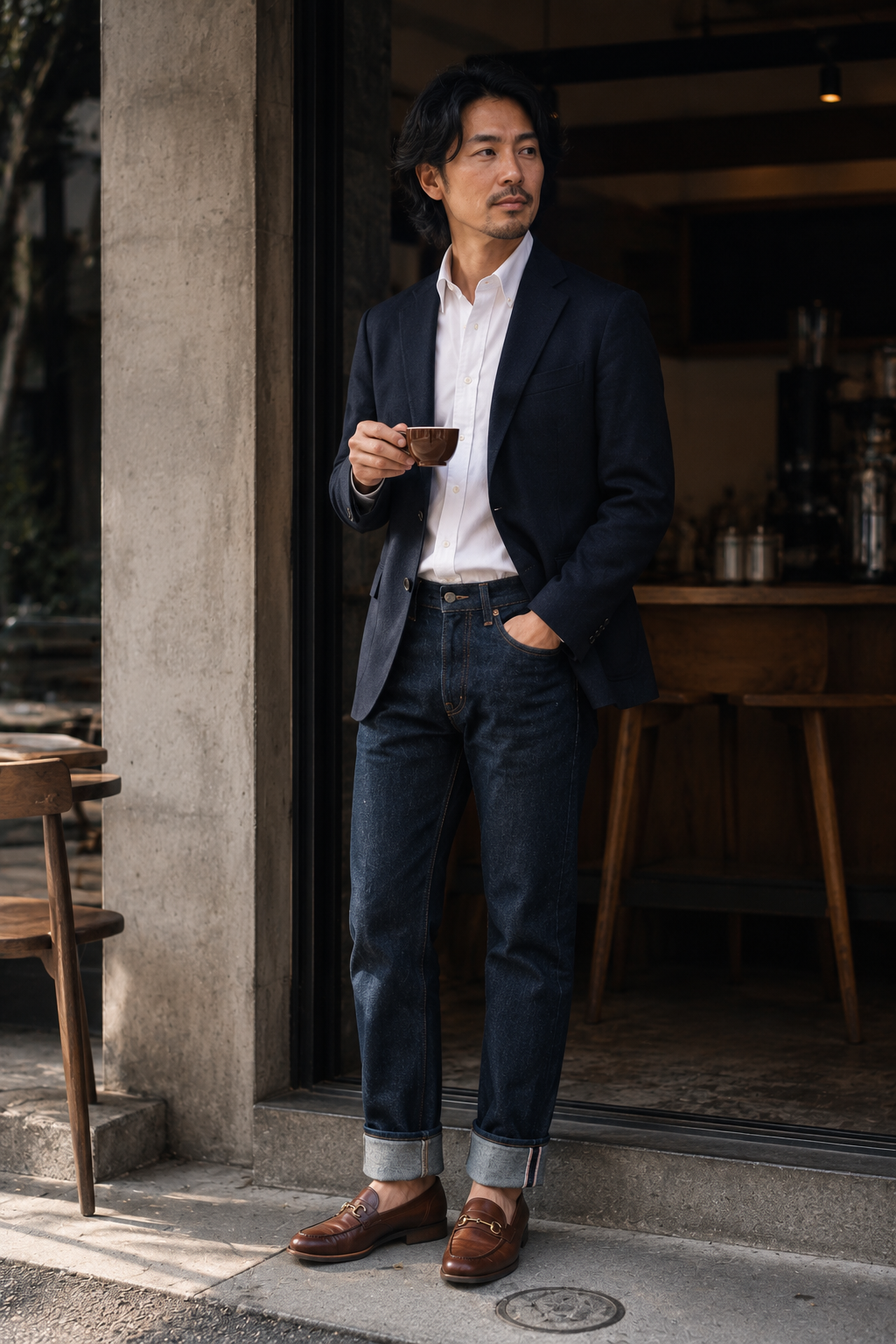
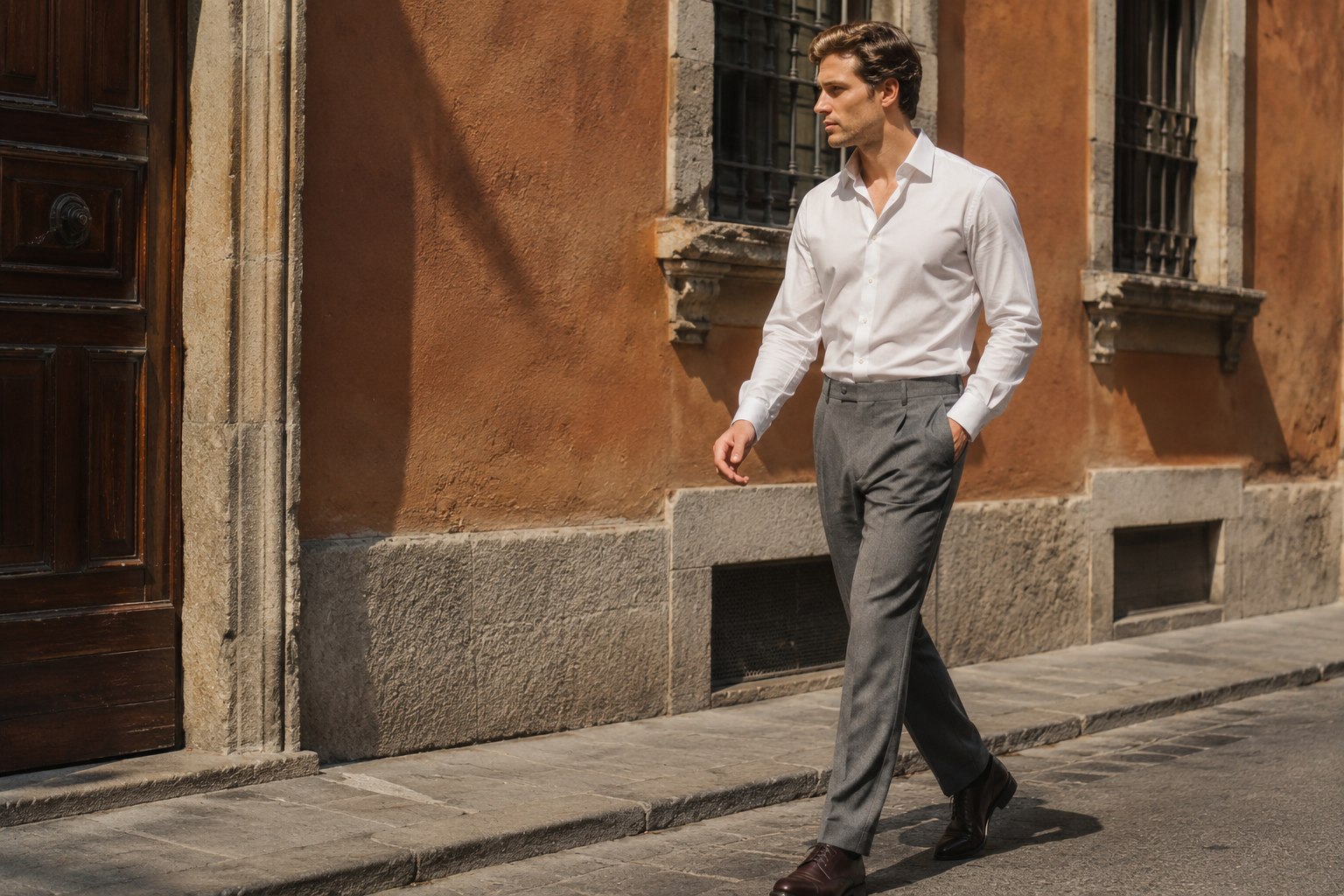
Mill-made selvedge paired with an unstructured blazer reads grown-up rather than workwear, which is the silhouette the contemporary Okayama brands cut toward.
Frequently asked
What is the actual difference between Japanese denim and regular denim?
Loom type and indigo. Japanese mills still use mid-century shuttle looms that produce a denser, slubbier weave with a self-finished selvedge edge, and they rope-dye in pure indigo without sulphur. Both choices show up in the fade pattern and the longevity. For comparable construction thinking, see our case for unbranded basics.
Should I buy raw or pre-washed Japanese denim first time?
Pre-washed or one-wash is forgiving for a first pair: less shrinkage, less indigo bleed, and the silhouette out of the bag is close to the final fit. Raw denim is more rewarding over time but needs three to six months of daily wear before the first wash to develop the fade. Cross-shop current selvedge on the products catalog.
How should Japanese denim sizing run?
Sanforized (pre-shrunk) fits true to waist and shrinks 1-3% on first wash. Unsanforized (shrink-to-fit) needs to be sized up two inches in the waist and three in the inseam. Check the product listing for which it is, and reference the proportions in our menswear tailoring guide for matching cuts.
Where do the deals on Japanese denim actually land?
Rarely on the heritage mill labels. The contemporary brands that source from the same mills discount in mid-July and mid-January, same windows as the leather jackets in our leather guide. Brand-direct international shipping is often where the real saving sits.