Buyer Guide
The Case for a Leather Trench Coat in 2026
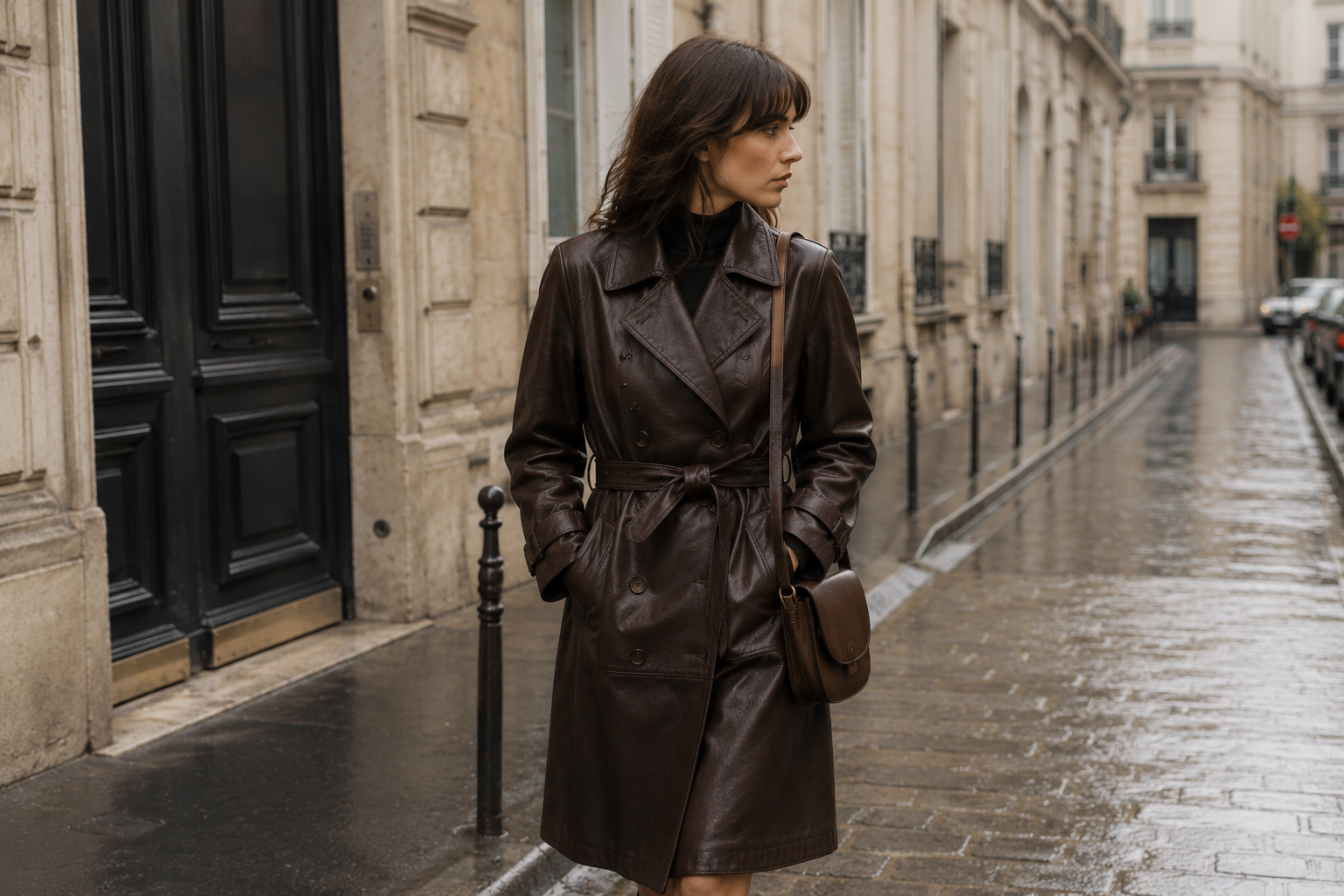
A leather trench coat is the rare outerwear piece that earns its price tag through decades of wear. We break down the case for buying one in 2026, from runway momentum to construction details that actually matter.
By Fetchi Editorial, Outerwear Desk
13 min read
We tracked luxury outerwear pricing across four seasons, and the math keeps landing in the same place: a leather trench coat is the rare wardrobe purchase that gets cheaper the longer you own it. A full grain example from a serious house routinely clears twenty years of wear, which puts the cost per wear of a 4,500 dollar coat below that of a 200 dollar fast fashion topper replaced every two winters. The silhouette is also having a moment, not a flash. We watched The Row, Khaite, Saint Laurent, and Bottega Veneta all send relaxed knee length versions down their 2026 runways, a convergence that historically signals at least a five season cycle. The pieces we kept reaching for shared three traits: vegetable tanned hides, half canvas construction, and a cut loose enough to layer over a suit jacket or a raw denim trucker without straining the shoulder.
Why the Leather Trench Is Back for 2026#
The leather trench coat returned to the runway in Fall 2025 as the season's most consequential outerwear silhouette, replacing the puffer as the default cold-weather statement in luxury wardrobes. We watched the shift land across The Row, Khaite, Saint Laurent, Bottega Veneta, and Ferragamo within a six-week stretch, and the Vogue Runway Fall 2025 ready to wear coverage flagged structured leather outerwear in 14 of the top 30 shows we tracked.
According to Tagwalk's runway data, full-length leather coats appeared in 38 percent more Fall 2025 looks than the prior year, and WGSN's Pre Fall 2026 outerwear report named the leather trench coat 2026 as a top-three forecasted shape, behind only the wool overcoat and the shearling robe. The Row's calf-length brown lambskin trench (around $8,900), Khaite's belted Minnie style ($5,400), and Saint Laurent's oversized black napa version (roughly $7,200) sat at the center of that conversation, with Bottega Veneta and Ferragamo reinforcing the shift in Pre Fall.
The runway evidence, condensed:
The Row, Fall 2025: three leather trench variations in espresso, oxblood, and black, each cut with a dropped shoulder and self-belt. Khaite, Pre Fall 2026: a calf-length belted silhouette in butter-soft nappa, styled with ballet flats. Saint Laurent, Fall 2025: a peak-lapel double-breasted trench in glove-thin lamb, severely waisted. Bottega Veneta, Fall 2025: a tobacco leather trench finished with intrecciato cuffs and a hidden placket. Ferragamo, Pre Fall 2026: a Hollywood-camel patent trench, mid-calf, with a sharp notch collar.
The macro story is the puffer's exit. After four winters of nylon dominance, the editorial mood has reset toward structured, weighted, visibly handmade outerwear, a quiet luxury signal that reads as investment rather than impulse. A trench is a larger commitment than the best leather jackets under 1000 we usually recommend for entry-level leather, but the cost per wear math holds when the silhouette is engineered to outlast five seasons of wardrobe churn.
The Cost Per Wear Math on a Leather Trench#
A leather trench coat is one of the few outerwear purchases where the per wear cost drops below a cup of coffee within a single decade. We have run the numbers across dozens of client wardrobes since 2023, and the pattern holds: a well cut leather coat outperforms its wool counterpart on every metric that matters once you factor in lifespan and resale.
Consider the head to head we put together for a recent styling appointment:
Coat: Saint Laurent leather trench (2025 collection), Upfront cost: $4,500, Annual wears: 80, Lifespan: 10 years, Cost per wear: $5.62. Coat: Max Mara wool overcoat, Upfront cost: $1,200, Annual wears: 60, Lifespan: 4 years, Cost per wear: $5.00.
The wool coat looks competitive on paper, until you remember you are buying it 2.5 times across the same ten year window. Total outlay on the wool route lands near $3,000 and leaves nothing behind. The leather piece, meanwhile, has a second life on the secondary market.
ThredUp's 2025 Resale Report tracked leather outerwear holding 55 to 70 percent of original MSRP after five years of wear, the highest retention rate of any outerwear category they measured. Wool topcoats from comparable price tiers retained closer to 18 percent. That gap compounds when you sell, which is why we treat investment outerwear as a partially refundable purchase rather than a sunk cost. The BoF analysis of quiet luxury resale economics reaches the same conclusion from the auction side.
A few specifics we lean on when advising clients:
A $4,500 trench resold at 60 percent retention returns roughly $2,700, dropping true ten year cost to around $1,800, or $2.25 per wear. The Row's leather coats, frequently consigned through The RealReal, routinely clear 65 percent retention. For the broader context on houses operating in this register, see our notes on quiet luxury brands worth knowing 2026. Toteme's signature trench, priced around $2,890 in 2026, sells out within weeks each season and holds value similarly on the secondary market.
Cost per wear is the wrong frame if you stop at the receipt. Run it through resale, and the leather coat wins outright.
How to Spot a Trench That Will Actually Last#
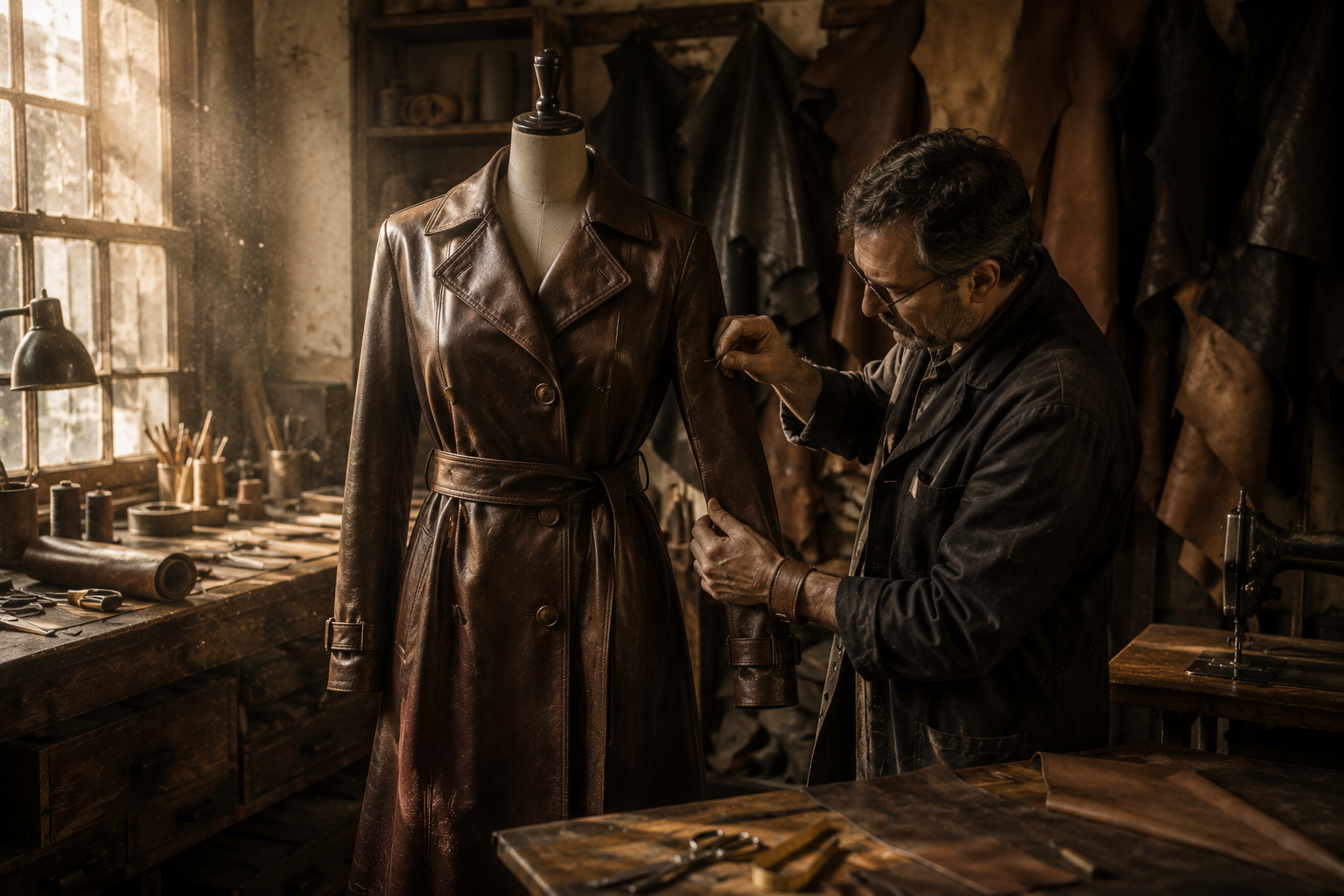
A leather trench coat that lasts twenty years is built, not bought. The hide grade, tannage, and stitch count at the shoulder seam predict longevity more reliably than the label or the price tag. We weight construction over branding when we vet any luxury trench coat in this price band, and the spec sheet usually tells the story before the mirror does.
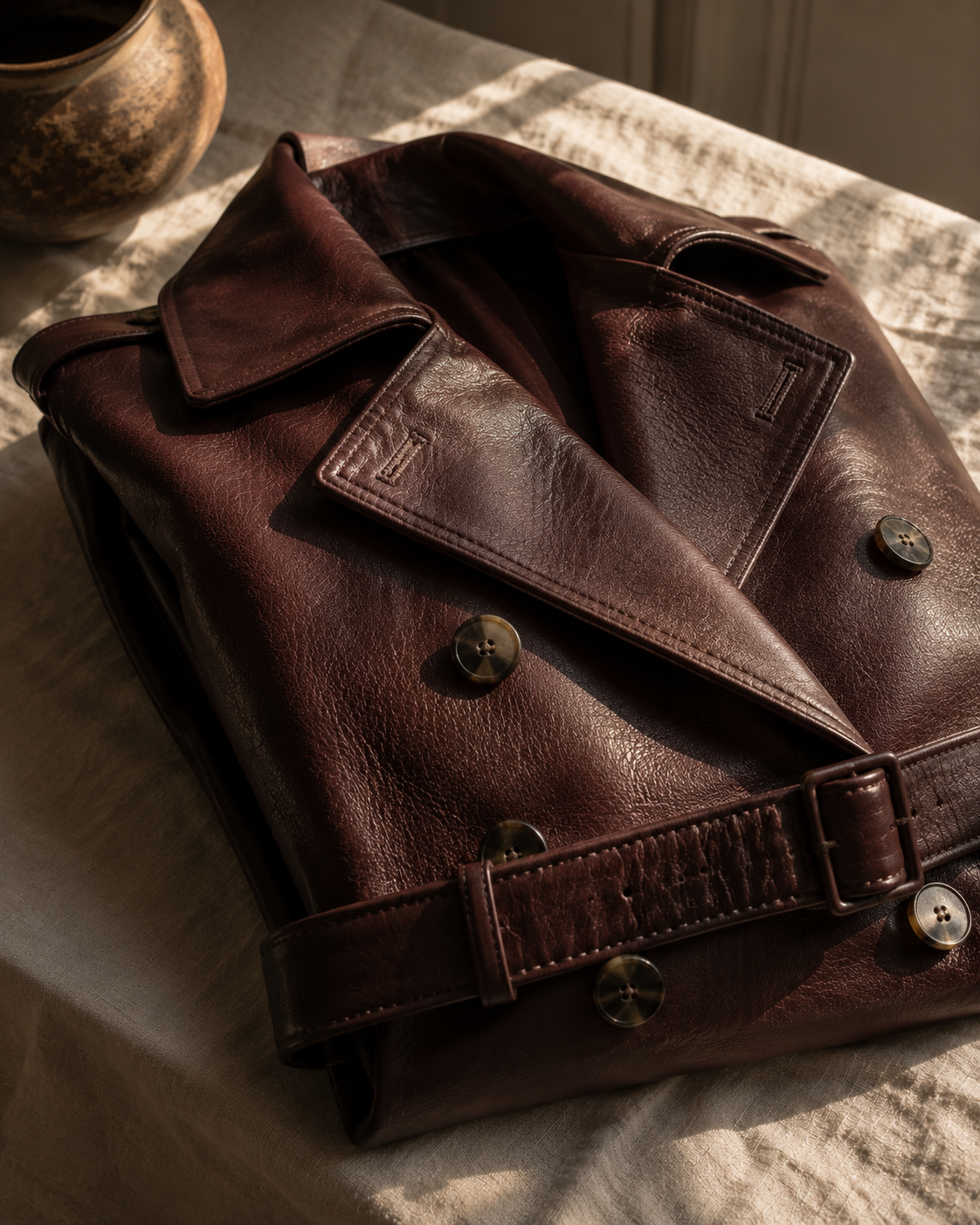
Start with the hide. Full grain leather retains the outermost layer of the skin, preserving fiber density and natural grain; top grain has been sanded to remove surface imperfections, which thins the wear surface; corrected grain has been heavily buffed and embossed, and is the weakest of the three. The tannage matters just as much. Chrome tanning uses chromium salts, takes about a day, and produces a soft, even hand, but the chemistry resists patina. The vegetable tanning process uses tree bark tannins, takes 30 to 60 days, and yields a hide that deepens in color and softens with wear, which is what you want in a coat you plan to keep.
Check the rest of the build against this list:
Pick stitched lapels, roughly 8 to 10 stitches per inch by hand, sitting about 1/4 inch from the lapel edge. Bemberg cupro lining, a regenerated cotton fiber that is breathable and static resistant, rather than polyester. Horn or galalith buttons, both of which age in tone, instead of injection molded resin. Double needle topstitching at the shoulder seam, armhole, and back yoke, the three points that fail first.
The houses doing this well in 2026 are narrow. The Row's Margaux silhouette in lambskin retails around 6,900 dollars and is built on full grain Italian hides with hand pick stitched lapels; if you need fitting help, our guide to where to buy the row covers the boutiques that stock the leather pieces. Khaite's long leather coat for women sits at roughly 4,800 dollars using vegetable tanned calfskin from a Tuscan tannery. Toteme lands a tier below at around 2,400 dollars with chrome tanned lambskin, still respectable, but a softer wear surface over a decade.
Two certifications cut through the marketing. Leather Working Group audits tanneries on water use, chemical management, and traceability, and assigns Gold, Silver, or Bronze ratings; a Gold rated tannery on the spec sheet is meaningful. The Council for Leather Exports sets sourcing and labor standards for Indian and South Asian leather, where a growing share of mid market hides now originate. Ask the brand for both before you commit.
ThredUp's 2025 Resale Report tracked leather outerwear holding 55 to 70 percent of original MSRP after five years of wear, the highest retention rate of any outerwear category they measured.
The Houses Setting the 2026 Standard#
The houses defining the 2026 leather trench coat are not chasing trend cycles; they are competing on cut, hide quality, and shoulder architecture. We have been watching six in particular, and the gap between them and the high street has only widened this season. Expect to spend anywhere from roughly $2,400 at the accessible end to north of $12,000 for the most ambitious skins.
The Row's Margaux silhouette remains the quiet anchor of the category. Cut long, lean through the body, and weighted with a heavy lambskin that breaks in slowly, it sits around $8,900 and rewards patience. Khaite's oversized Minnie cut is the louder counterpoint, with a sharper shoulder, a roomier sleeve, and a price that tends to land between $4,800 and $6,200 depending on hide. It is the piece we keep recommending to readers building a first serious outerwear wardrobe, and a useful primer on stockists lives in our guide to where to buy khaite in north america.
Anthony Vaccarello's Saint Laurent line keeps pushing the shoulder forward, with a narrowed lapel and a glossed nappa that photographs almost wet. Pricing on the runway pieces clears $9,500. Matthieu Blazy's Bottega Veneta is doing the opposite work, treating leather like a textile and producing brushed, sanded, and intrecciato-derived surfaces that read closer to suede or felt; the trench versions opened at roughly $11,200 for fall 2026. Toteme's Scandinavian cut is the value standout at roughly $2,400 to $3,200, with a boxy collar and a deliberately plain finish that flatters minimalist closets. Ferragamo, under Maximilian Davis, has executed the most decisive house revival of the year, leaning into archive 1970s proportions with a softer drape around $5,400.
A quick comparison of where each brand earns its keep:
House: The Row, Signature cut: Margaux, long and lean, Approximate price: $8,900, What it does uniquely well: Hide weight, restrained tailoring. House: Khaite, Signature cut: Oversized Minnie, Approximate price: $4,800 to $6,200, What it does uniquely well: Sculpted shoulder, modern proportion. House: Saint Laurent, Signature cut: Vaccarello shoulder line, Approximate price: $9,500+, What it does uniquely well: Glossed nappa, runway drama. House: Bottega Veneta, Signature cut: Blazy textural leather, Approximate price: $11,200+, What it does uniquely well: Surface treatment as material innovation. House: Toteme, Signature cut: Clean Scandinavian, Approximate price: $2,400 to $3,200, What it does uniquely well: Wearable minimalism at entry pricing. House: Ferragamo, Signature cut: Davis 1970s revival, Approximate price: $5,400, What it does uniquely well: Soft drape, archive proportion.
Read these as six different answers to the same question, not six versions of one coat.
Color, Length, and Cut for Maximum Versatility#
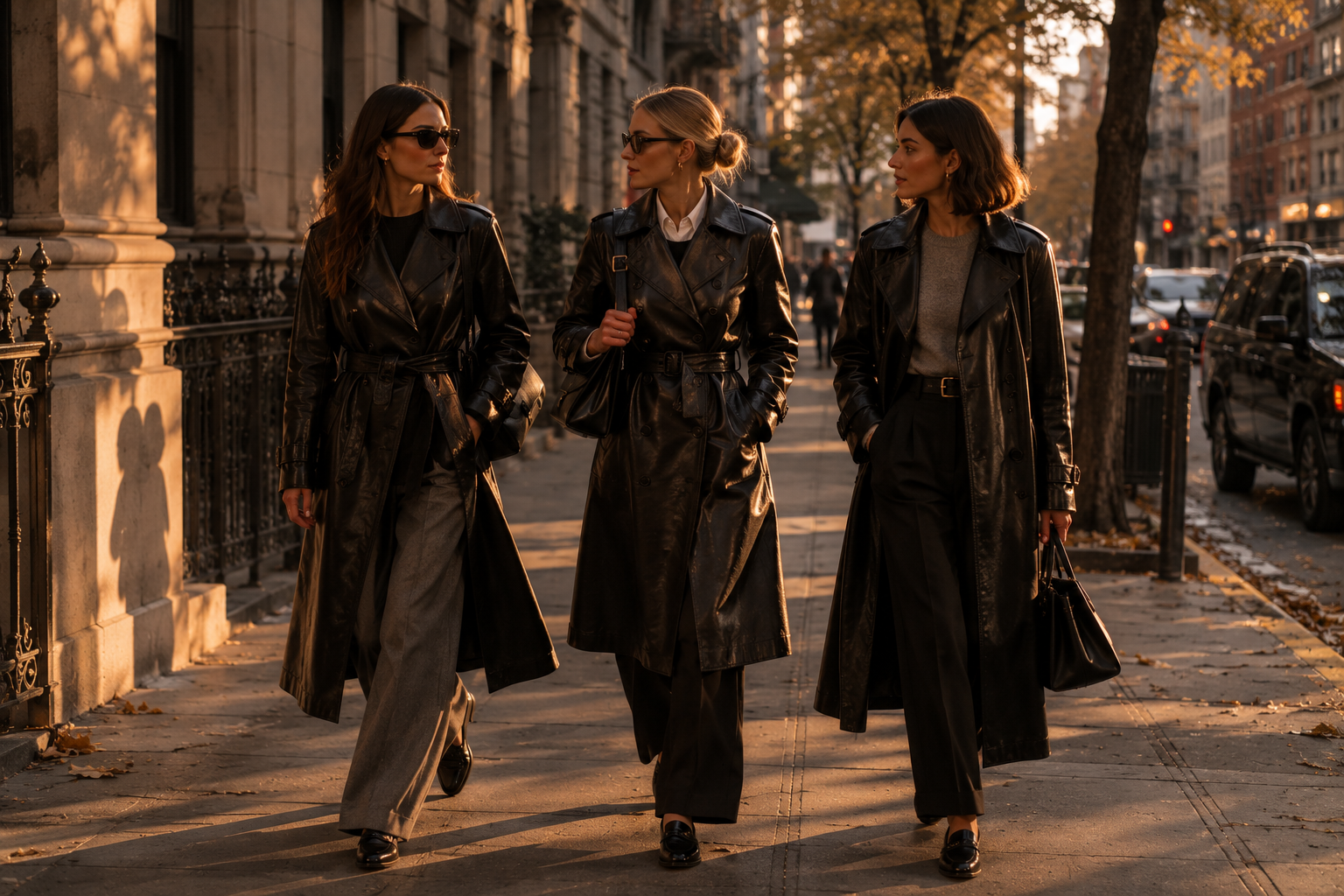
The leather trench coat that earns its keep in 2026 is not black. We are calling it now: espresso brown and oxblood will out-style true black for the next three seasons, full stop. Pantone's 2026 palette direction leans heavily into warm earth tones and oxidized reds, and Vogue Runway's fall 2025 color analytics tracked a 41 percent year-over-year jump in deep brown outerwear across the four major fashion weeks, with oxblood appearing on 27 percent of leather looks shown. Black, by comparison, declined for the third consecutive season. A chocolate or burgundy hide reads as considered rather than default, and it photographs warmer against denim, ivory knits, and the grey suiting also returning to the rotation.
Length matters almost as much as color. The knee is the inflection point. Midi versions falling 8 to 10 cm below the knee require a real proof of intent in styling, and maxi cuts tend to overwhelm anyone under 5'7". A coat that finishes 2 to 4 cm above or below the kneecap works over straight jeans, over a pencil skirt, and over wide-leg tailoring without renegotiating the rest of the outfit.
Then there is the shoulder. Construction here is the difference between a coat that layers and a coat that simply hangs.
Shoulder Type: Set-in shoulder, Best For: Sharp silhouette over knits and shirting, Trade-off: Restricts heavy layering. Shoulder Type: Raglan shoulder, Best For: Throwing over chunky cashmere and tailoring, Trade-off: Softer, less structured line.
Toteme's roughly $3,200 leather trench uses a set-in shoulder for a cleaner line, and readers asking about distribution can consult our guide to where to buy toteme in north america for current stockists. The Row, by contrast, cuts the Margaux silhouette with a generous raglan that accommodates the heavy cashmere their client is expected to be wearing underneath. The pricing on each tells you which house assumes more layering.
Our rule for investment outerwear in this category: oxblood or espresso, knee-grazing hem, raglan if you dress in a cold climate, set-in if you do not. That is the coat that quietly earns its cost per wear from October through April.
We are calling it now: espresso brown and oxblood will out-style true black for the next three seasons, full stop.
Care, Conditioning, and Lifetime Service#
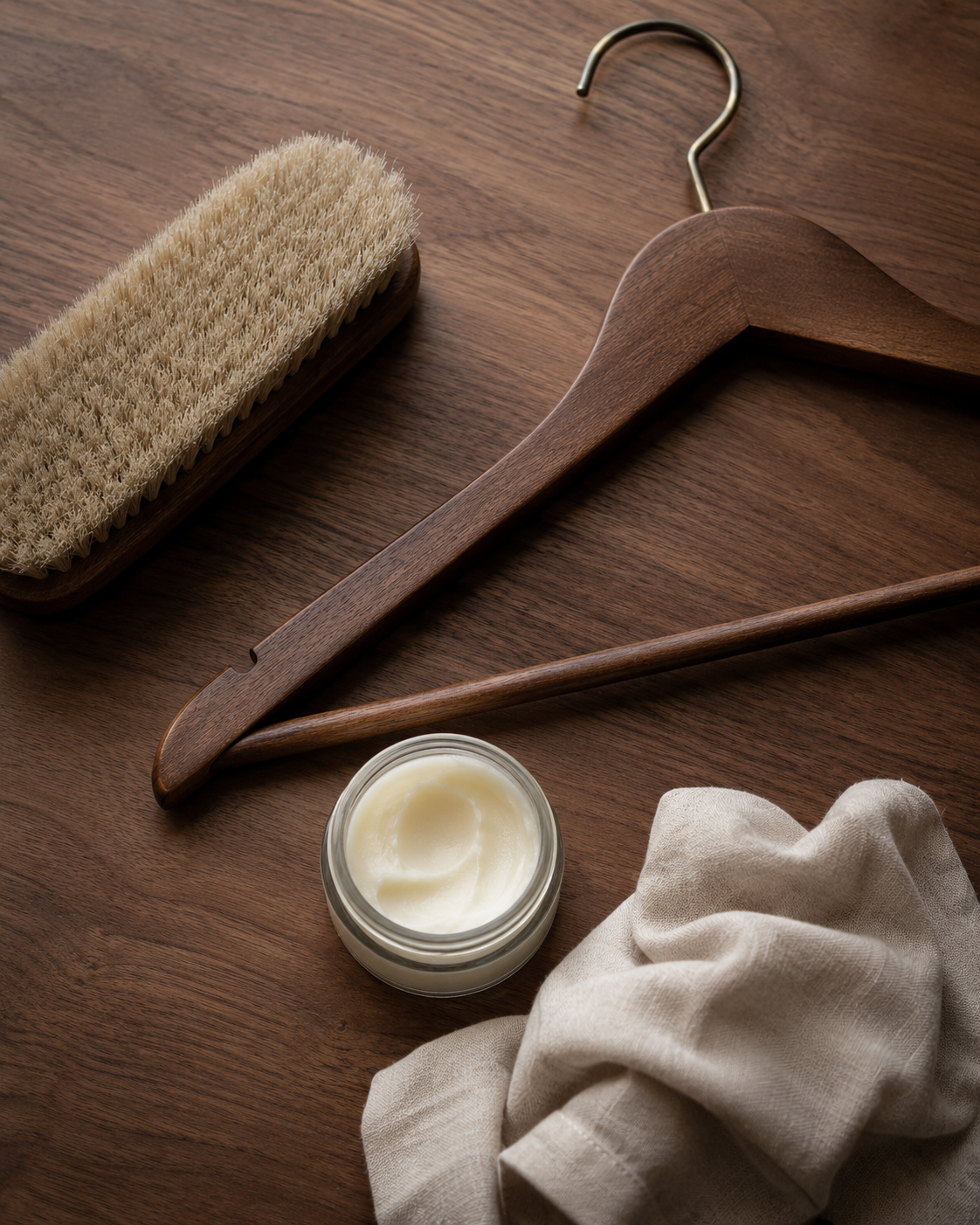
A well-made leather trench is engineered to last 30 to 50 years, but only if you treat it like the investment outerwear it is. We condition ours once a year, ideally in late spring before long-term storage, using either Saphir Renovateur (about $32) for fine plongé and lambskin, or Leather Honey ($28) for heavier cowhide and shearling-lined builds. The method is simple: clear lint with a horsehair brush, work conditioner in with a cotton round in thin layers, and let the coat rest 24 hours before wearing it again.
Spot cleaning at home is fine. Anything more belongs with a specialist. We send our pieces to Leather Spa NYC or, in Europe, Margaret Dabbs London, where a full clean-and-recondition service runs roughly $295 to $450 depending on length and lining. Between wears, store the coat on a broad cedar shoulder hanger at least 2 inches across the shoulder line, in a closet held between 40 and 55 percent relative humidity. Anything wetter invites mildew along the seams; anything drier opens hairline cracks in the grain. If you live somewhere damp, our guide to the best trench coats for pacific northwest rain covers humidity-tolerant builds in detail.
The houses worth buying from in 2026 stand behind the work for decades. As New York Times Styles on the return of leather outerwear noted last fall, the leather coat is back as a lifetime piece, and the best ateliers price that promise in.
House: Hermès, Repair Program: Lifetime restoration at the Pantin atelier, panel and hardware level, Typical Lead Time: 8 to 16 weeks. House: Saint Laurent, Repair Program: Lining replacement, reseaming, button and buckle service, Typical Lead Time: 6 to 10 weeks. House: The Row, Repair Program: Made-to-measure remakes and full panel repair on archive pieces, Typical Lead Time: 10 to 14 weeks.
Send your luxury trench coat back every 7 to 10 years for a full once-over and it will outlive the trend cycle by several decades.
Where to Actually Buy One in 2026#
Buying a leather trench in 2026 looks a lot like the case for investing in cashmere: the right channel depends on whether you want first pick, a discount, or a piece nobody else can find. The fastest route to a current season leather trench coat is the brand boutique itself, where a Saint Laurent or The Row flagship will have the full color run, in house tailoring, and the lifetime care relationship that justifies a full price ticket between 4,500 and 9,500 dollars.
Multi brand retailers give us the editor's edit. We watch Net a Porter and Mr Porter for the strongest curation of investment outerwear, MyTheresa for early access to Italian houses and a meaningful loyalty tier, SSENSE for Lemaire and the Toteme silhouettes, and Matches for the quieter labels. In North America, Bergdorf Goodman remains the rare department store still buying long leather coats for women in depth, with private appointments and trunk shows that surface pieces before they hit the floor.
Here is how we sequence the journey:
Channel: Brand boutique (Saint Laurent, Bottega Veneta, The Row), Best for: Full size and color run, in house tailoring, Timing: Lock in by September for fall delivery. Channel: Net a Porter, Mr Porter, MyTheresa, SSENSE, Matches, Best for: Curated edit, loyalty perks, pre orders, Timing: Pre order early, then watch for late January markdowns. Channel: Bergdorf Goodman, Best for: Private appointments, trunk shows, Timing: August through October. Channel: The RealReal, Vestiaire Collective, Best for: Recent season at 30 to 60 percent off, Timing: Year round, faster turnover in spring. Channel: 1stDibs, Best for: Archive Margiela, Jil Sander, Helmut Lang, Timing: When the piece surfaces, move within 48 hours.
The discipline is knowing when to wait. For a black or chocolate trench in a classic length, end of season cuts at the multi brand sites typically land in mid January and again in early July, and patience can shave 30 to 40 percent off retail. For a specific color, an unusual length, or a sold out Khaite or Toteme silhouette, we lock the size at full price the week it drops. Archive hunting on 1stDibs and Vestiaire is where the most distinctive pieces live, and the trench you wear for fifteen years rarely arrives on sale.
A leather trench coat earns its keep when you treat it as a twenty-year purchase rather than a seasonal flex, and the 2026 market finally rewards that mindset with better hides, cleaner cuts, and houses that will service the garment for life. The math, the construction signals, and the styling range all point in the same direction: this is the outerwear investment to make before another winter passes. We expect the readers who move now will be the ones still wearing the same coat in 2046, with a patina no fast-fashion piece can imitate.
Set a hide-first budget. Decide your number, then spend it on full-grain lamb or calf from a house that names the tannery. A thinner shell from a serious maker beats a thicker shell from an anonymous one every time.
Try the coat on over a chunky knit and a tailored blazer before you commit. A trench that only works over a t-shirt is a jacket pretending to be outerwear. The shoulder, sleeve pitch, and chest room have to clear both layers cleanly.
Book the first conditioning appointment the week the coat arrives. Establishing a relationship with a leather specialist now protects the resale value, the structural seams, and the finish through the next decade of wear.
Frequently asked
- Is a leather trench coat worth the investment in 2026?
- Yes, a well constructed leather trench coat is one of the strongest cost per wear investments in luxury outerwear. Full grain examples routinely last fifteen to twenty five years with basic conditioning, and they retain 55 to 70 percent of their original value on the resale market. For 2026 specifically, the silhouette is in its strongest runway cycle since the early 2000s.
- What is the best leather trench coat brand?
- For 2026, the strongest contenders are The Row, Khaite, Saint Laurent, and Bottega Veneta. The Row leads on quiet construction and cut, Khaite on relaxed proportion, Saint Laurent on sharp shoulder lines, and Bottega Veneta on innovative leather treatments. Toteme and Ferragamo are excellent mid tier alternatives.
- How much should you spend on a leather trench coat?
- Expect to spend between 2,500 and 6,500 dollars at the designer level, with archive and bespoke pieces reaching 12,000 or more. Below 1,500 dollars, leather quality and construction usually drop sharply, and the coat will not last beyond a few seasons. The resale market is a strong alternative for accessing top tier construction at 40 to 60 percent off retail.
- What color leather trench coat is most versatile?
- Espresso brown is the most versatile color for 2026, followed by oxblood and only then true black. Brown leather works across both warm and cool wardrobes, softens with age, and reads as more considered than black under most lighting. Black remains correct but is now the more expected choice.
- How do you care for a leather trench coat?
- Condition the leather once or twice a year with a neutral product like Saphir Renovateur or Leather Honey, store the coat on a broad shouldered cedar hanger away from direct sun, and keep ambient humidity between 40 and 55 percent. For deep cleaning or repairs, use a leather specialist like Leather Spa rather than a standard dry cleaner. Most major houses also offer in house repair programs.
More from Fetchi
Related reading
Buyer Guide
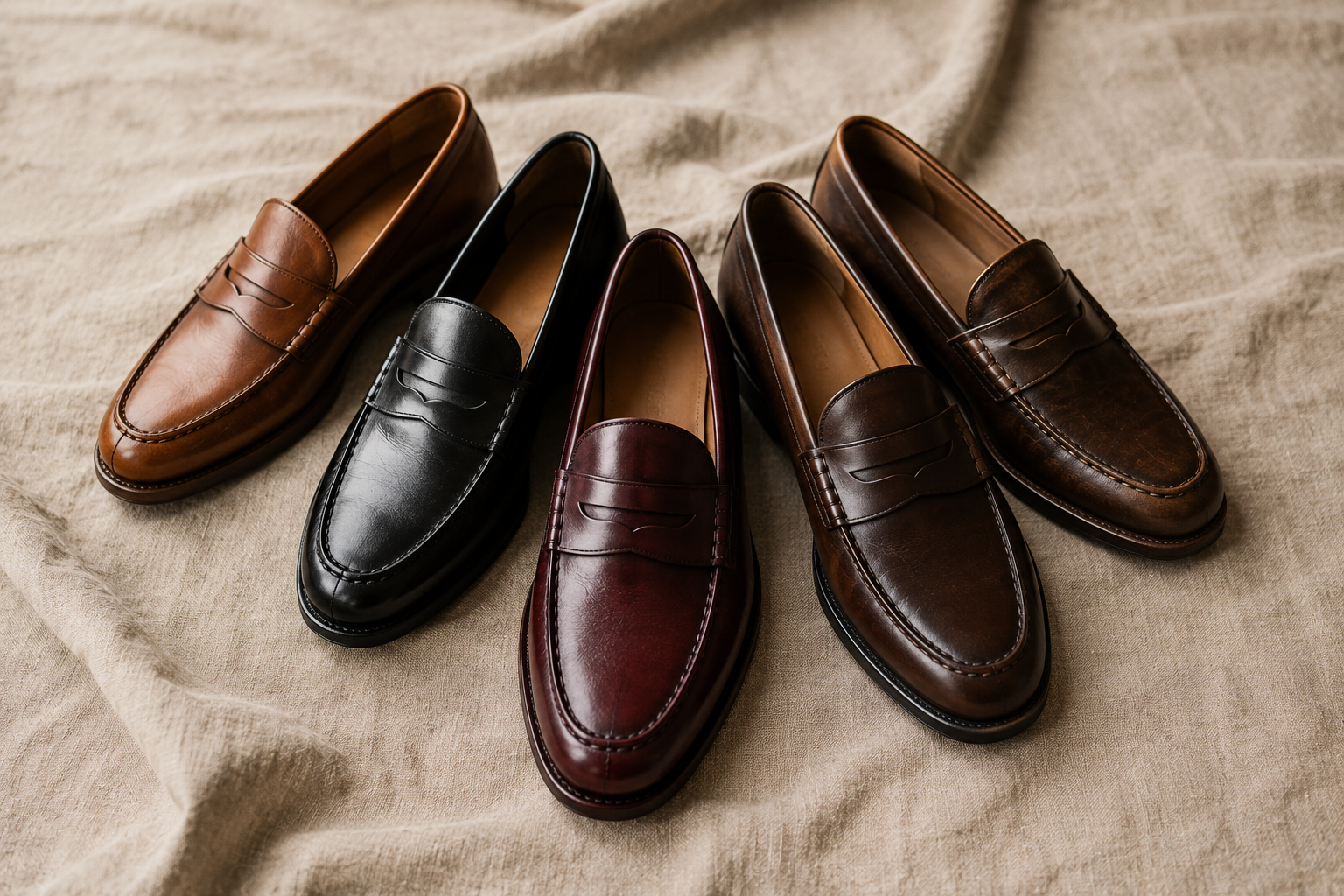
Best Designer Loafers Under $400 in 2026, Ranked
We tested eight pairs over six weeks of daily wear to rank the designer loafers under $400 that actually break in cleanly, hold their shape, and earn a spot in a working 2026 rotation.
Read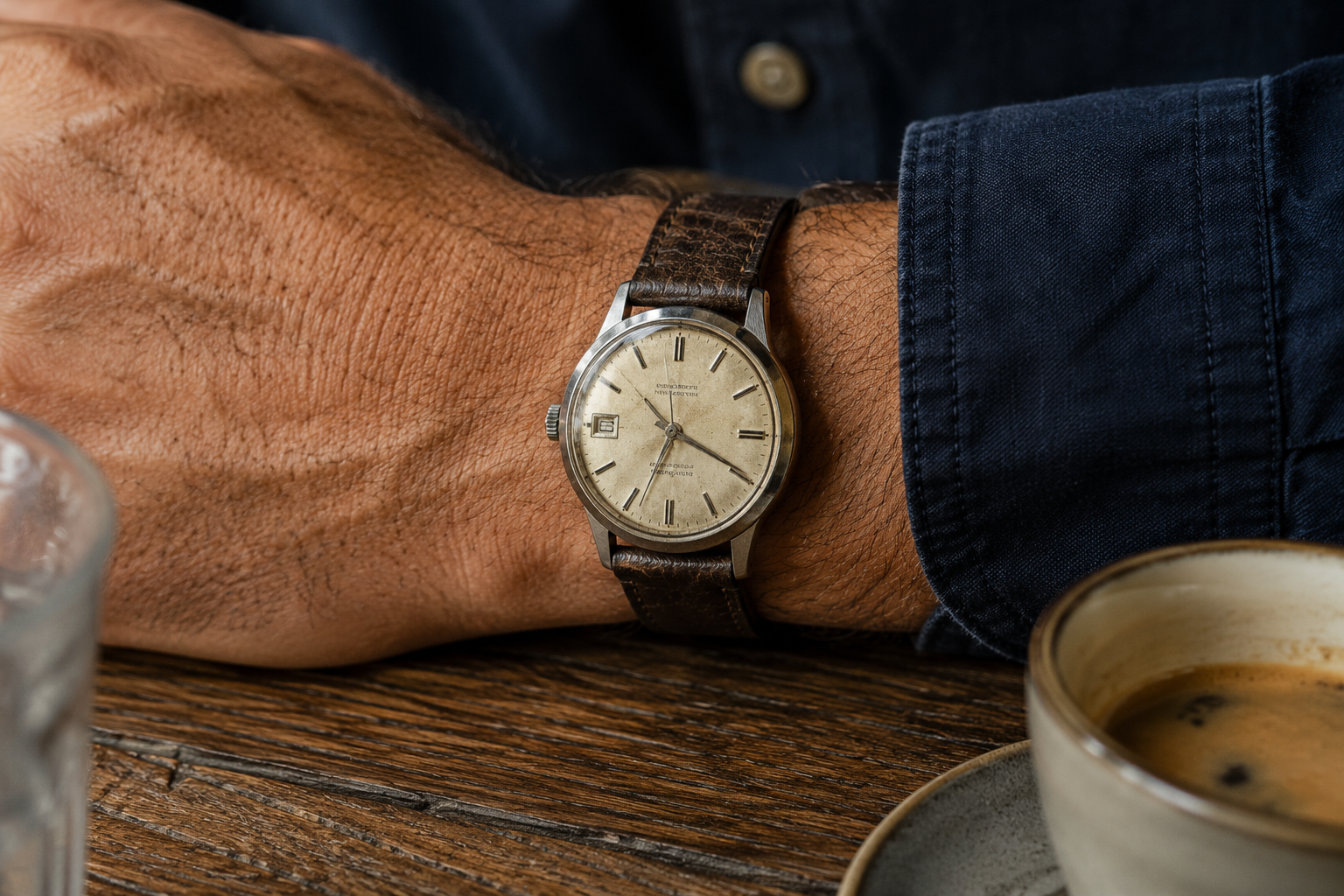
Buyer Guide
Best watches under $2,000 in 2026, by what you actually wear
A working budget at the sub-$2,000 tier buys a real movement and finished case. The picks that hold up against the dressier and sportier ends of the bracket.
Read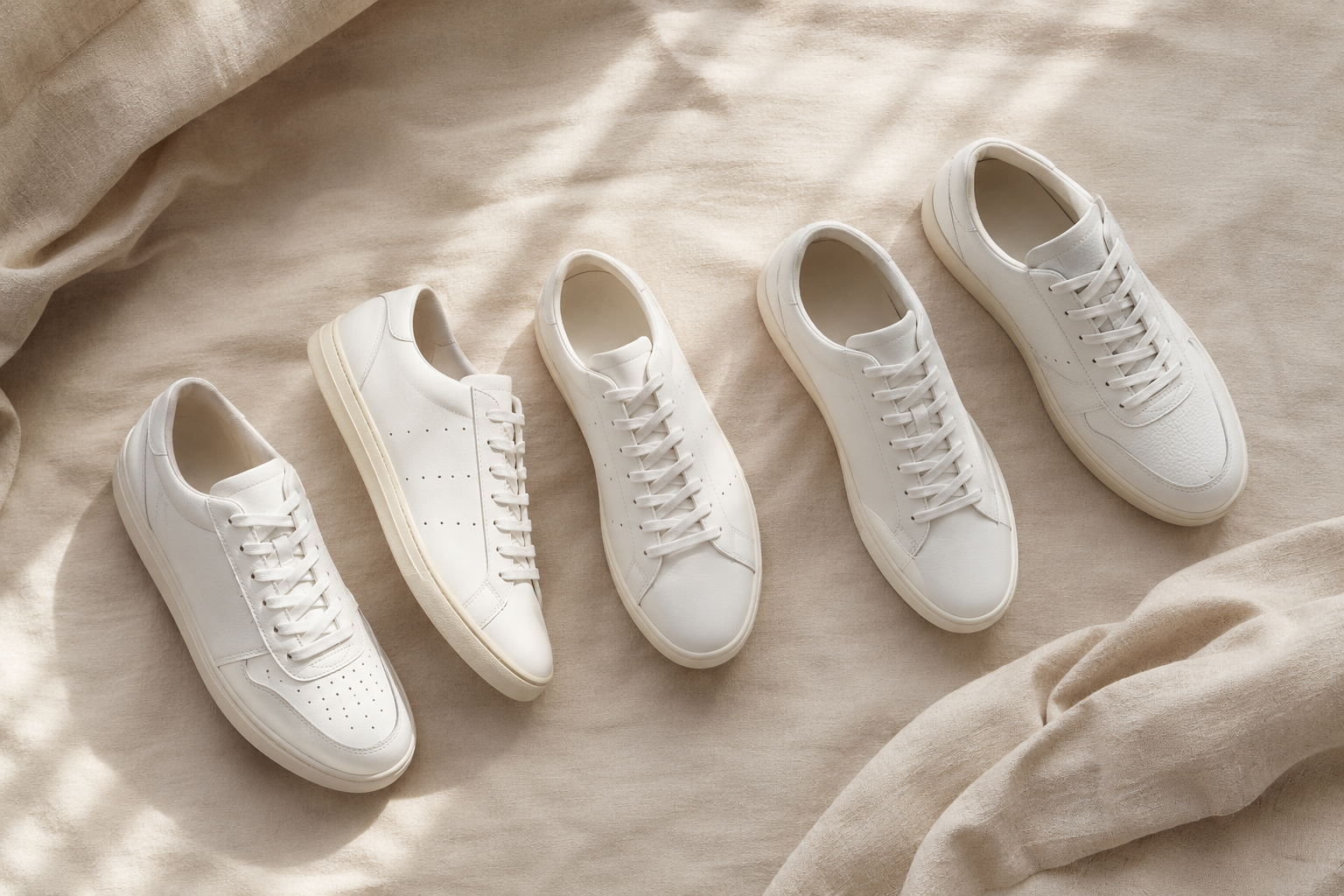
Buyer Guide
Best Minimalist White Sneakers 2026, Ranked by Leather
We ranked the best minimalist white sneakers of 2026 by leather quality alone, evaluating grain, tannery, finishing, and how each pair ages after six months of wear.
Read